
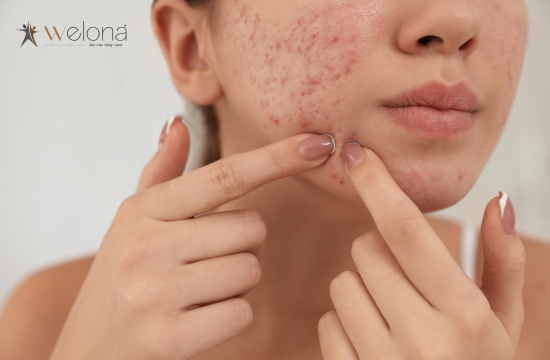
Living in Chennai means battling humidity, heat, and pollution – all of which can worsen acne issues. But for many, the real struggle begins after the acne clears. The deep, depressed acne scars left behind can be even more stubborn than the breakouts themselves. It can impact their confidence and overall skin appearance long after it has healed.
If you have tried creams, serums, and facials with little success, the issue likely isn’t on the surface; it’s underneath. Deep acne scars (specifically “rolling scars”) are often tied down by fibrous bands that pull the skin inward, creating that dreaded uneven texture. Subcision treatment is one of the most effective therapies for such deep, depressed acne scars. Unlike surface treatments that work only on the top layer of skin, Subcision treats scars from within by addressing the structural cause of scarring.
Here is everything you need to know about Subcision treatment – how it works, the results you can expect, safety considerations, and why Welona in Chennai is the best dermatology clinic for this treatment.
Understanding Subcision Treatment for Acne Scars
Subcision (Subcutaneous Incisionless Surgery) is a minor dermatological procedure targeting depressed (atrophic) acne scars. These scars appear as indentations or pits in the skin, resulting from fibrous bands pulling the skin downward and creating an uneven texture. Unlike laser treatment for acne scars that works outside in, Subcision works from the inside out.
The Subcision Procedure:
- The Tether: Severe acne causes fibrosis (scar tissue) in the deep dermis. These fibrous bands act like anchors, pulling your surface skin down and creating a depression.
- The Release: During Subcision, a dermatologist inserts a specialized hypodermic needle (often a Nokor needle or cannula) parallel to the skin surface.
- The Lift: The needle is used to physically break or “subcise” these fibrous bands. Once the tension is released, the skin snaps back up to its natural level.
- Collagen Boost: The controlled trauma from the needle stimulates a wound-healing response, encouraging the body to produce new collagen to fill the space, further smoothing the scar.
By breaking these internal attachments, Subcision improves skin smoothness from the inside out. According to a comprehensive review published in the National Institutes of Health (NIH) database, Subcision is considered a primary treatment for rolling acne scars because it addresses the structural tethering that other treatments cannot reach. Read the full NIH review on Subcision efficacy here.
Why Subcision Treatment is Excellent for Acne Scars
Many acne scars do not improve with creams, facials, or superficial treatments because the problem lies below the skin surface.
Subcision works because it:
- Releases scar tethering at the root
- Restores natural skin contour
- Triggers collagen regeneration
- Improves scar depth and texture
This makes it especially effective for scars that look worse when the skin is stretched.
Subcision is Best for:
- Rolling acne scars
- Depressed scars with soft edges
- Tethered scars
- Long-standing acne scars
It is less effective on:
- Ice-pick scars
- Very superficial pigmentation marks
Dermatologists often combine Subcision treatment with other treatments for comprehensive improvement.
Why Welona Clinic in Chennai is Best for Subcision Treatment
Subcision is a manual, technique-dependent procedure. The results and success rate totally depend on the expertise of the dermatologist performing it. Here is why you should choose Welona for Subcision treatment.
Expert Hands
At Welona, Subcision is strictly performed by MD Dermatologists, not technicians. Our doctors have the precision required to release the scar without damaging the surrounding tissue.
Cannula Subcision
We often use blunt cannulas instead of sharp needles. This advanced technique significantly reduces pain, bruising, and the risk of damaging blood vessels, making the recovery much faster.
Combination Therapy
We know Subcision works best when paired with other treatments. We frequently combine it with Dermal Fillers (to hold the skin up) or Fractional CO2 Laser (to smooth the surface) in the same session for maximum impact.
Hygiene Standards
We maintain a sterile, clinical environment to ensure zero risk of infection, a crucial factor for any invasive treatment.
Realistic Expectations
You will know what to expect out of the procedure. Improvement typically ranges from 30 to 70 percent, depending on scar type, depth, skin response, and whether combination treatments are used. No false promises made at Welona.
Result, Downtime, and No of Sessions
Recovery timeline:
- Mild swelling for 1 to 3 days
- Bruising may last 5 to 10 days
- Skin texture begins improving once swelling settles
Downtime:
- Initial improvement is visible after the swelling reduces
- Continued improvement over 4 to 8 weeks
- Collagen remodelling continues for several months
No of sessions depends on:
- Scar depth
- Scar extent
- Skin response
Subcision vs Other Acne Scar Treatments
| Treatment | Best For | Limitation |
| Subcision | Deep, tethered scars | Not for surfaced scars |
| Microneedling RF | Texture and collagen | Less effective for tethered scars |
| Laser | Pigmentation and texture | Limited effects on deep scars |
| Chemical peels | Superficial marks | Not for depressed scars |
Is Subcision Safe for Indian Skin?
Subcision is a technique-sensitive procedure that must be done only under an experienced dermatologist’s supervision. While it is considered safe for indian skin because it does not involve heat or aggressive resurfacing, safety depends on:
- Proper depth control
- Knowledge of facial anatomy
- Correct patient selection
- Sterile technique
Incorrect technique can lead to uneven results or prolonged bruising. This is why clinic-based dermatology care is essential.
To Wrap It Up
You don’t have to let acne scars define your complexion forever. If you have “dents” or rolling scars that makeup can’t hide, Subcision is the science-backed solution you’ve been looking for. At Welona, Subcision is performed as part of a comprehensive acne scar management plan, not as a standalone cosmetic procedure. We combine medical expertise with artistic precision to give you smoother, clearer skin.
Ready to smooth out your skin? [Book Your Appointment at Welona]
Visit our centers in Anna Nagar, T-Nagar, or Adyar for an expert skin assessment.
Call Us: 044 4011 4444
Faq: Subcision Treatment for Acne Scars
Is Subcision painful?
No. Because we use local anesthesia, you won’t feel pain during the procedure—just some pressure or tugging. You may feel mild soreness once the anesthesia wears off, similar to a bruise.
Are the results permanent?
Yes! Once the fibrous band is cut, it typically does not re-form. However, you may need 2–4 sessions to fully release all the bands and achieve optimal smoothness.
Can it treat Ice Pick scars?
Subcision is best for Rolling and Boxcar scars. Deep “Ice Pick” scars are better treated with Microneedling RF (another treatment available at Welona). Our doctors often combine both for comprehensive results.
Can I go to work the next day?
Yes, physically, you are fine to work. However, you will have visible bruising on your face. Many of our patients prefer to schedule the procedure on a Friday so the initial bruising settles by Monday.
How soon will I see results?
You will see an immediate lift because of the swelling, but the real results appear after 3–4 weeks as new collagen forms, and the skin heals in its new, elevated position.