
Treating hyperpigmentation effectively requires targeting the specific depth of the melanin. The most scientifically validated treatments include:
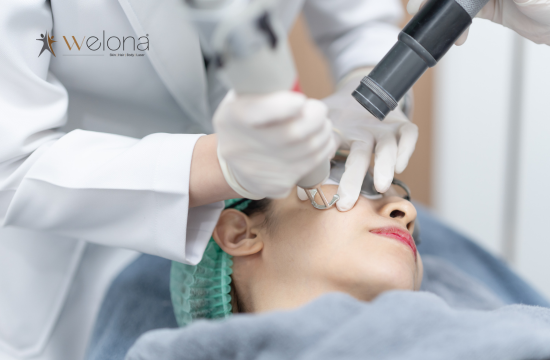
- Q-Switched Nd: YAG Laser (TriBeam): The gold standard for deep dermal pigmentation like Melasma and Post-Inflammatory Hyperpigmentation (PIH). It uses photoacoustic energy to shatter melanin clusters into dust without burning the skin.
- Medical-Grade Chemical Peels: Advanced blends of Glycolic, Lactic, and Trichloroacetic Acid (TCA) that chemically dissolve the top layers of dead, pigmented skin cells to reveal an even complexion.
- Microneedling Radiofrequency (MNRF): In cases where pigmentation is associated with acne scars or uneven texture, treatments like Microneedling Radiofrequency (MNRF) can be beneficial.
Understanding Pigmentation: Why They are Harder To Treat
Pigmentation can be stubborn, unpredictable, and often frustrating to treat. Many people start with over-the-counter creams or home remedies, only to see limited or temporary improvement. In a climate like Chennai, where UV exposure remains high year-round, pigmentation can persist or recur if not treated properly.
Modern dermatology has moved beyond surface-level solutions. Today, treatments target pigmentation at its root by regulating melanin production, breaking down pigment deposits, and improving skin turnover. The key is choosing the right treatment for the type of pigmentation, rather than relying on a one-size-fits-all approach.
Because of this complexity, dermatologists design treatment plans that address both the pigment and the underlying triggers. At Welona Clinic, our approach to dermatology is rooted in deep research, rigorous clinical analysis, and medical honesty. Surface-level cosmetics fail because stubborn pigmentation is not a surface-level problem—it is a structural issue deep within your dermal layers. Here are the top 3 treatments for pigmentation from Welona:
Q-Switched Nd: YAG Laser Treatments for Pigmentation
For deep, stubborn dermal pigment, traditional heat-based lasers are incredibly dangerous for Indian skin. Excessive heat triggers melanocytes to produce more pigment, causing a severe rebound effect. The solution is the Q-Switched Nd: YAG Laser, specifically the TriBeam Premium.
The Science: Instead of relying on photothermal (heat) energy, the TriBeam utilizes a photoacoustic effect. It delivers ultra-fast, nanosecond pulses of light that bypass the skin’s surface and reach deep melanin clusters. The energy creates a microscopic shockwave that physically shatters the pigment into ultra-fine dust without burning the surrounding tissue. Your body’s lymphatic system then safely flushes this dust away.
- Why we use it: It is the safest and most analytical method for breaking down complex conditions such as melasma and deep PIH.
- The Evidence: A systematic review published in the National Institutes of Health (NIH) database confirms that low-fluence Q-Switched Nd: YAG lasers are a highly effective and safe clinical standard for treating melasma, significantly reducing pigment severity when used properly.
Chemical Peels for Pigment Regulation
Chemical peels remain one of the most widely used dermatology treatments for pigmentation. They work by exfoliating damaged skin layers and promoting new cell turnover.
Superficial and medium-depth peels are commonly used to treat:
- Mild to moderate pigmentation
- Dull and uneven skin tone
- Post-inflammatory hyperpigmentation
Peels also help regulate melanin activity over time, making them effective as part of a long-term treatment plan rather than a one-time procedure.
Why we use it: Peels are highly customizable. A superficial Lactic acid peel can provide an immediate glow before an event, while a medium-depth TCA peel can aggressively correct sunspots and uneven skin tone.
The Evidence: Comprehensive clinical analyses on chemical peels for melasma validate that agents like Glycolic acid are both safe and highly effective in accelerating the clearance of hyperpigmentation in skin of color.
Microneedling Radiofrequency (MNRF): The Dermal Restorer
For years, dermatologists treated melasma and hyperpigmentation as strictly an epidermal (surface) issue. However, advanced clinical research has caused a massive paradigm shift in how top clinics approach stubborn pigment. This is where Microneedling Radiofrequency (MNRF) comes in as one of the best treatments for pigmentation.
Instead of targeting the pigment directly, MNRF targets the damaged environment causing the pigment. An array of ultra-fine, gold-plated needles penetrates the skin, bypassing the surface melanocytes completely. Once safely in the dermis, the needles release a burst of Radiofrequency (RF) heat.
- Why we use it: MNRF rebuilds the basement membrane, reduces the abnormal vascular network feeding the melasma, and replaces senescent (aging) fibroblasts with fresh, healthy collagen. By fixing the dermal foundation, you stop the pigment from recurring.
- The Evidence: Extensive research in the National Institutes of Health (NIH) database on dermal targeting therapy for melasma demonstrates that MNRF use significantly reduces relapse, demonstrating its protective effect in maintaining long-term skin clarity for darker skin types.
Why Choose Welona Clinic in Chennai?
Treating hyperpigmentation is a highly delicate medical procedure. It requires deep diagnostic skills and an absolute refusal to cut corners.
- MD Dermatologist Exclusivity: We do not allow technicians to guess your machine settings. An MD Dermatologist evaluates the precise depth of your pigment under a dermatoscope and manually calibrates the laser fluence or acid percentage.
- Honesty in Expectations: We hate lies as much as you do. We will tell you upfront: Melasma cannot be permanently cured. It can be successfully cleared by 80-90% and managed beautifully, but anyone who promises you a “permanent, one-session cure” is not telling the truth.
- Combination Therapies: The most effective clinical results come from combining modalities. We frequently use a highly analytical protocol that combines TriBeam Laser Toning, superficial chemical peels, and MNRF to address pigment from every biological angle.
Conclusion: Trust the Science, Not the Hype
Stubborn pigmentation requires a meticulous, deeply researched medical approach. Do not waste your time and money on unverified salon treatments that risk burning your skin and worsening the problem. At Welona Clinic in Chennai, we rely on clinical evidence and state-of-the-art technology to safely restore your skin’s natural clarity.
[Book Your In-Depth Pigmentation Assessment at Welona Today] Consult with our expert dermatologists in Anna Nagar, T-Nagar, or Adyar to check out different treatments for pigmentation.
FAQs
Can I use over-the-counter bleaching creams to remove my pigmentation?
We strongly advise against unprescribed skin-lightening creams, especially those bought online. Many counterfeit creams contain dangerously high levels of unmonitored steroids or hydroquinone, which can cause severe skin thinning and permanent, untreatable blue-black pigmentation (Ochronosis).
How many laser sessions will I need to see results?
Breaking down pigment is a biological process that takes time. Most patients require a baseline of 6 to 8 sessions, spaced 2 to 3 weeks apart.
Can pigmentation be removed permanently?
Pigmentation can be significantly reduced, but recurrence is possible if triggers such as sun exposure or hormonal changes are not controlled.