
Dermatologists recommend TriBeam Laser because it uses advanced technology to treat hyperpigmentation without heating or damaging the skin.
- The Core Technology (Rich-PTP): Instead of delivering a single, intense blast of heat (which can worsen conditions like melasma), TriBeam uses Photoacoustic Twin Pulse (Rich-PTP) technology. It splits high-energy laser beams into two rapid consecutive pulses.
- The Mechanism: This creates a “photoacoustic” shockwave that physically shatters deep melanin clusters into microscopic dust, rather than melting them with heat. Your body’s immune system then naturally flushes this dust away.
- Because it minimizes heat buildup in the epidermis, TriBeam is considered especially safe and effective for Indian skin (Fitzpatrick Types IV-V), with a drastically reduced risk of Post-Inflammatory Hyperpigmentation (PIH). This makes it a preferred option for complex pigmentation.
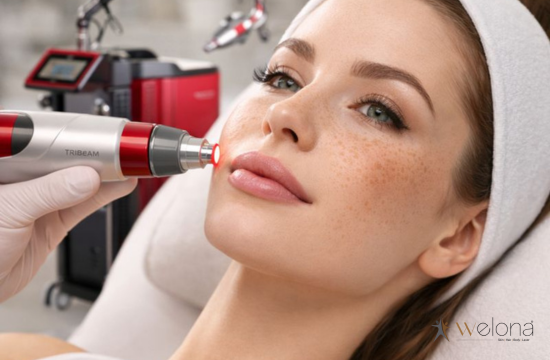
Why Dermatologists Recommend TriBeam Laser for Stubborn Pigmentation
Pigmentation is a common concern in tropical areas like Chennai due to sun exposure, pollution, hormonal changes, and post-acne marks. While many try home remedies or creams, persistent pigmentation often resists surface treatments.
Dermatologists frequently see patients who have tried many products without lasting results. Often, these cases involve deeper pigment deposits in the skin, for which topical treatments alone are insufficient. In such situations, advanced laser technologies, such as TriBeam Laser, offer more effective solutions.
Understanding Why Pigmentation Becomes Stubborn
Pigmentation develops when melanocytes, the melanin-producing cells, become overactive—often triggered by sun exposure, hormonal changes, inflammation, or skin injury. Gradually, pigment builds up within the skin layers, making treatment more challenging.
Conditions such as melasma, post-inflammatory hyperpigmentation, and sun spots often involve pigment that sits deeper in the skin. In these cases, creams may only lighten the surface temporarily without addressing the underlying pigment clusters. Dermatologists seek treatments that reach deeper skin layers yet remain safe for surrounding tissues. Laser technology offers this precision.
The Science: How TriBeam Hacks the Physics of Light
TriBeam Premium builds upon Q-Switched Nd:YAG lasers. Its proprietary features give it clinical advantages over basic Q-Switched options.
Here is the deep-level science of why dermatologists trust it:
Rich-PTP (Photoacoustic Twin Pulse) Technology
This is TriBeam’s crown jewel. Standard lasers fire one high-energy pulse. This single pulse generates significant collateral heat, which risks burning the surrounding tissue.
TriBeam splits the energy into two fast pulses, reducing heat while treating pigment.
- The Result: It delivers maximum destructive power to the melanin cluster while keeping the surrounding skin temperature completely stable.
- The Mechanism: Instead of a thermal (heat) effect, it creates a Photoacoustic effect (a microscopic shockwave). This acoustic wave hits the clump of melanin and shatters it into ultra-fine dust, much like a high-pitched sound shattering a glass, without burning the tissue.
Dual Wavelength Precision
Pigment sits at different depths. TriBeam uses two light wavelengths to target both deep- and surface-pigment.
- 1064nm Wavelength: Penetrates deep into the dermis. We use this to target deep dermal melasma, blue/black tattoo ink, and deep acne marks.
- 532nm Wavelength: Stays superficial in the epidermis. We use this for surface freckles, age spots, and sunspots.
Genisys Mode for “Laser Toning.”
Beyond shattering pigment, the TriBeam offers “Genisys Mode,” which uses gentle pulses to warm the dermis and prompt collagen production. So as we erase your dark spots, we also shrink pores and tighten skin.
Fractional Handpiece for Absolute Safety
For sensitive cases, the Fractional handpiece splits the laser into 81 tiny dots, evenly spreading energy and preventing hot spots.
TriBeam Laser vs. Traditional Pigment Treatments
Why do we choose TriBeam over other available modalities for complex cases?
| Feature | Chemical Peels | Traditional IPL/Basic Lasers | TriBeam Premium Laser |
| Depth of Penetration | Superficial (Epidermis only) | Superficial to Mid-Dermis | Deepest (Reaches Dermal Pigment) |
| Energy Delivery | Chemical Exfoliation | Photothermal (High Heat) | Photoacoustic (Shockwave/Low Heat) |
| Risk of Rebound Pigmentation | Moderate | High (on Indian skin) | Extremely Low |
| Downtime | 3 to 7 Days (Peeling) | 1 to 3 Days (Redness) | Zero Downtime (Lunchtime Procedure) |
| Best Used For | Surface dullness, mild tan | Fair skin, light sunspots | Melasma, PIH, Deep Freckles, Indian Skin |
Honest Expectations: What Can TriBeam Treat?
At Welona, we strictly adhere to medical truth. We do not sell false promises. Here is what the TriBeam can achieve:
- Melasma: The TriBeam is the safest tool for melasma. However, melasma has no permanent cure. It is hormonally driven. The TriBeam will successfully break down the visible pigment and suppress melanocyte activity, clearing your complexion by 70-90%. You will need maintenance sessions to keep it at bay.
- Post-Inflammatory Hyperpigmentation (PIH): TriBeam permanently clears dark marks from acne or injuries, typically in 3-5 sessions.
- Freckles and Lentigines (Age Spots): TriBeam destroys pigment clusters, providing lasting results unless new sun damage occurs.
- Carbon Peeling (Hollywood Peel): Medical-grade carbon absorbs into pores before TriBeam removes it, vaporizing dead skin, oil, and blackheads for an instant glow.
What Happens During a TriBeam Session at Welona?
At Welona centers, your consultation and treatment follow a strictly clinical and monitored process.
- Microscopic Analysis: Our MD Dermatologist evaluates the exact depth of your pigment using a dermatoscope. We do not use “preset” machine settings; the doctor manually calibrates the TriBeam’s wavelength and fluence for your specific skin.
- The Procedure: We cleanse your skin and provide protective eyewear. The doctor passes the laser over the targeted areas.
- The Sensation: Because of the Rich-PTP technology, the procedure is incredibly comfortable. You will feel a mild, warm prickling sensation—like fine rain hitting your face—and hear a rapid “snapping” sound as the acoustic waves hit the pigment.
- Zero Downtime: Full face sessions take 15-20 minutes. Mild flushing may last 30 minutes; you can apply sunscreen and resume normal activities immediately.
To Wrap It Up
Treating stubborn pigmentation requires a scientific and gentle approach. Harsh methods usually worsen the issue; TriBeam targets pigment without harming skin, leading to better outcomes.
The TriBeam Laser represents the pinnacle of optical precision—destroying the pigment you hate while protecting the skin you love. When combined with the diagnostic expertise of Welona’s dermatologists, you finally have a safe, predictable roadmap to a clear, even complexion.
Consult our MD Dermatologists in Anna Nagar, T-Nagar, or Adyar to create your tailored TriBeam protocol. With thorough assessment, consistent sessions, and aftercare, laser therapy supports a balanced complexion.
[Book Your In-Depth Pigmentation Analysis at Welona Today]
Call Us: 044 4011 4444
FAQ
Does the TriBeam laser thin the skin?
This is a very common myth. No, the TriBeam does exactly the opposite. Through its Genisys mode, the laser delivers gentle thermal energy that stimulates fibroblasts to produce new collagen and elastin, making your skin thicker, firmer, and more resilient over time.
Will my dark spots look darker after the first session?
Sometimes, yes. When treating deep dermal pigment, the laser shatters the melanin, and your body begins to push it toward the surface to eliminate it. This can temporarily make the spot look slightly darker or more diffuse for a few days before it fades. This is a normal part of the biological clearance process.
Do I need to avoid the sun completely?
You cannot go to the beach or expose your face to direct, peak Chennai sunlight without protection. While TriBeam does not make your skin raw or peel, UV rays will trigger your melanocytes to produce new pigment, undoing the laser’s work. Daily application of a broad-spectrum SPF 50 is strictly mandatory.