
Hair loss affects men and women differently, but the emotional impact feels the same. If you’ve considered a hair transplant but felt overwhelmed by the technical terms, you’re not alone.
The world of hair restoration has evolved massively-becoming more natural, less invasive, and far more predictable. In 2026, the two biggest techniques you’ll hear about are FUE and DHI.
Both are advanced, but each has its own approach and benefits. Here’s a simple, clear, dermatologist-level explanation.
Let’s break down the techniques:
1. FUE (Follicular Unit Extraction)
FUE is the most commonly performed transplant worldwide.
How it works:
– Individual follicles are harvested with tiny punches
– No strip of skin is removed
– Follicles are implanted manually into the thinning areas
Why people love FUE:
– Minimal scarring
– Quick recovery
– Natural-looking results
– Best for early to moderate hair loss
It’s also the preferred technique for women who need a subtle correction without shaving the entire scalp.
2. DHI (Direct Hair Implantation)
DHI is like FUE – but with an upgraded implantation method.
What’s different:
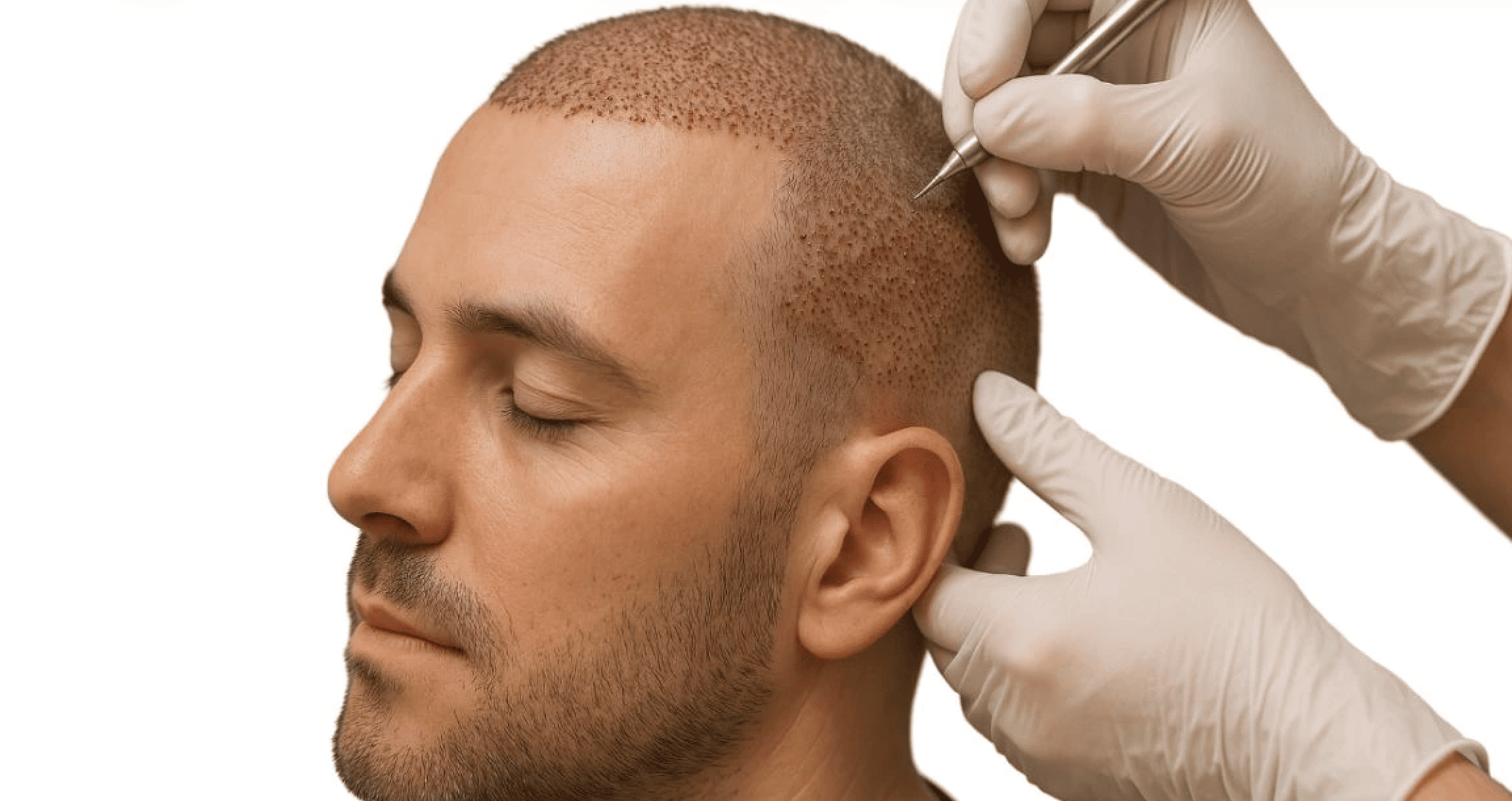
– Follicles are implanted using a Choi Implanter Pen
– No premade channels; the pen places each follicle directly
– Higher precision in angle and depth
Why dermatologists use DHI:
– Faster implantation
– Higher graft survival rate
– Better control of density and direction
– Faster healing in many cases
DHI is especially suitable for people who want:
– Higher hairline density
– Temple shaping
– Eyebrow restoration
– Natural-looking female hairlines
3. Which Technique Is Better?
Neither is “better”-they are different tools.
A dermatologist recommends based on:
– Density required
– Hairline design
– Donor strength
– Scalp condition
– Gender & hair characteristics
Sometimes, a hybrid FUE + DHI approach delivers the most natural outcome.
4. What About the Future of Hair Restoration? (2026 and beyond)
The next wave of treatments focuses on strengthening results and improving graft survival.
Emerging innovations include:
– Stem-cell enriched grafts for higher growth rate
– Platelet-rich fibrin (PRF) used during transplant to boost healing
– Robotic-assisted extraction for extreme precision
– Laser therapy for post-op recovery
– Bio-enhanced graft storage fluids that keep follicles healthier during the procedure
We’re moving toward methods that ensure fuller, denser, more natural-looking results with minimal downtime.
5. What You Should Consider Before Choosing a Technique
Before deciding, you need to understand:
– Donor area quality
– Your long-term hair loss pattern
– Whether you need density or coverage
– Downtime available
– Whether you want a natural, soft hairline or just functional coverage
– Budget
A dermatologist-led transplant always gives better results than tech-led clinics because planning matters more than the procedure.
Conclusion:
If you’re thinking about a hair transplant, your best step is a professional evaluation-someone who studies your scalp, understands your goals, and recommends the right method.
At Welona, hair restoration specialists combine FUE, DHI, growth therapies, and advanced diagnostics to give results that look natural and last long.
Book your consultation today and take the first step toward confident, fuller hair.