

Acne scars are one of the most emotionally taxing skin concerns people deal with. The acne is gone, but the uneven texture, deep pits, and rough patches remain, often for years. If you’ve seriously started researching treatment options, two names keep coming up: MNRF (Microneedling Radiofrequency) and Fractional CO2 Laser.
Both are advanced and are clinically proven. What most people don’t get told upfront is that the better treatment depends almost entirely on your scar type, skin tone, and how much downtime you can tolerate. Here’s a clear, honest breakdown of how each treatment works and how to decide between them.
Quick Answer: MNRF vs CO2 Laser for Acne Scars
MNRF (Microneedling Radiofrequency) uses insulated microneedles to deliver radiofrequency energy into the dermis, stimulating deep collagen remodeling without damaging the skin surface. Fractional CO2 Laser creates controlled micro-injuries using laser energy, ablating skin tissue to trigger aggressive collagen regeneration. Both treatments deliver comparable scar improvement over a full course. CO2 laser may show faster visible results per session, but it involves 5 to 7 days of downtime and carries a higher risk of post-inflammatory hyperpigmentation in Indian skin. MNRF has 1 to 2 days of downtime, is safer for darker skin tones, and is better tolerated. For most Indian patients, MNRF is the safer first-line choice. CO2 laser is reserved for deeper, more severe scarring where faster structural remodeling is needed.
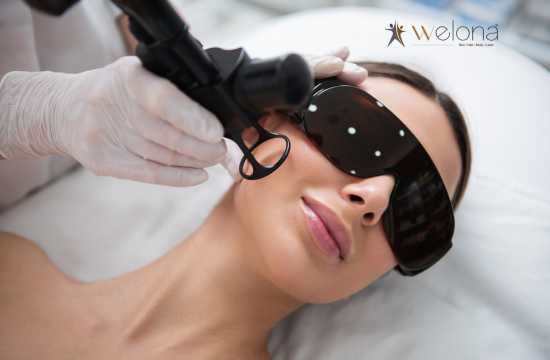
What Is MNRF?
MNRF stands for Microneedling Radiofrequency. It combines two well-established technologies: microneedling, which creates tiny controlled punctures in the skin to trigger the healing response, and radiofrequency energy, which delivers heat directly into the dermis through those needle channels.
What makes MNRF particularly valuable is how it delivers that energy. The needles used are insulated, meaning the radiofrequency heat bypasses the skin’s surface entirely and targets the deeper dermis, where scar tissue sits. This is a significant advantage for Indian skin because the epidermis, the pigment-containing layer, is left largely undisturbed. That means less risk of triggering new pigmentation as a side effect of treatment.
MNRF is especially effective for:
- Rolling scars and boxcar scars with sloping or broad edges
- Patients with Fitzpatrick skin types III to V (most Indian skin tones)
- People who cannot afford significant downtime between sessions
- Skin laxity alongside scarring, since MNRF also tightens the skin
What Is Fractional CO2 Laser?
Fractional CO2 Laser is an ablative resurfacing treatment. Unlike older CO2 lasers that removed the entire top layer of skin, fractional technology delivers laser energy in thousands of tiny, targeted columns called microthermal treatment zones (MTZs). Each column creates a controlled micro-injury from the epidermis down into the dermis, triggering the body’s wound-healing response and stimulating substantial collagen production.
The word “ablative” is key here. The laser physically removes skin tissue within those columns. The healthy surrounding skin then accelerates recovery and regeneration. This is what makes CO2 laser highly effective for deep, structural scarring, but it is also what causes more significant downtime and recovery compared to MNRF.
CO2 laser is great for:
- Deep ice pick scars and severe boxcar scars with sharp vertical edges
- Patients with lighter skin tones (Fitzpatrick I to III) where PIH risk is lower
- Cases where a faster, more dramatic improvement per session is the priority
- Patients who can manage 5 to 7 days of post-procedure recovery
Downtime and Recovery: A Real Difference
This is where these two acne scar treatments diverge most noticeably in day-to-day terms.
After MNRF, most patients experience mild redness and swelling for 24 to 48 hours. The skin may feel sensitive and slightly rough for a few days, but most people return to normal activity within 1 to 2 days. In most cases, there is no visible peeling or scabbing.
After a CO2 laser treatment, patients should expect 5 to 7 days of visible redness, swelling, and skin peeling as the ablated tissue sheds and new skin forms beneath. Sun exposure during this period is strictly off-limits, and a specific aftercare routine with prescribed ointments is essential. In Chennai’s climate, the recovery window requires careful management.
Which Works Faster?
CO2 laser typically delivers more noticeable improvement per session because it is more aggressive by design. Some patients see significant texture improvement after 1 to 2 sessions. MNRF works more gradually, with each session building on collagen remodeling from the previous one. Most patients require 4 to 6 MNRF sessions, spaced 4 to 6 weeks apart, to achieve optimal improvement.
If speed per session matters more to you, the CO2 laser has an advantage. If minimizing downtime and skin risk is the priority, MNRF is the more practical choice.
Can You Combine Both Treatments?
Yes, and for complex scar patterns, this is often the most effective approach. Many patients present with a mix of scar types: shallower rolling scars alongside deeper ice pick or boxcar scars. In such cases, dermatologists may recommend a staged protocol that uses MNRF for overall skin remodeling and CO2 laser for targeted deep scarring, either in separate sessions or sometimes in the same sitting.
Why Treat Acne Scars at Welona?
At Welona, acne scar treatment is never decided in a 10-minute consultation. Here’s what the approach looks like in practice.
Detailed scar mapping before any treatment. Before recommending MNRF or CO2 laser, Welona’s dermatologists perform a thorough scar assessment, classifying each scar by type, depth, and skin type. This determines whether your case calls for MNRF, a CO2 laser, a combination approach, or additional modalities such as subcision or dermal fillers alongside the laser work.
The right technology for your scar depth. Welona uses fractional CO2 laser technology designed for precise, calibrated ablation and MNRF devices with insulated needle tips that protect the skin surface. The equipment is not one-size-fits-all, and neither is its use. Settings are adjusted for your specific scar grade and Fitzpatrick skin type.
Combination protocols for complex cases. Many patients at Welona benefit from a multimodality plan, in which subcision releases tethered rolling scars, MNRF rebuilds collagen throughout the treatment area, and CO2 laser addresses the deepest structural scarring. This kind of coordinated planning is what separates a clinical outcome from a cosmetic one.
Honest timelines and expectations. Welona’s dermatologists set realistic improvement targets before treatment begins. You’ll know how many sessions are likely, what percentage of improvement is realistic, and what maintenance looks like post-treatment.
To Wrap It Up
MNRF and CO2 laser are both legitimate, well-researched treatments for acne scars. The research shows comparable outcomes over a full treatment course, but the path to get there is different. For most Indian patients, MNRF is the safer, better-tolerated starting point. For deeper or more severe scarring, a CO2 laser or a combination approach may deliver the result you’re looking for.
The only way to know which is right for your skin is a proper assessment by a qualified dermatologist who can evaluate your scar types, skin tone, and goals before making a call.
Book Your Acne Scar Consultation at Welona Consult with our expert dermatologists in Anna Nagar, T. Nagar, or Adyar to get a personalized treatment plan for your scars.
FAQ: MNRF Vs CO2
Is MNRF better than a CO2 laser for acne scars?
For Indian skin types, MNRF is generally safer and better tolerated, with a lower risk of post-inflammatory hyperpigmentation. CO2 laser may yield slightly faster results per session, but it involves more downtime and a higher risk of side effects in darker skin tones. Both deliver comparable long-term improvement
Is the CO2 laser safe for Indian skin?
It can be, when performed by an experienced dermatologist with proper settings for your skin type. However, it carries a higher risk of post-inflammatory hyperpigmentation in Fitzpatrick skin types IV and V compared to MNRF.
How long does it take to see results from acne scar treatment?
CO2 laser may show visible improvement after 1 to 2 sessions. MNRF results build gradually over 4 to 6 sessions as collagen remodeling progresses.