Two treatments that keep coming up in conversations about skin brightening and clarity are IV skin lightening therapy and medi facials. Both promise a visible improvement in skin tone and radiance. And both attract patients who have tried serums and creams for months with minimal results.
But they work through fundamentally different mechanisms, target different aspects of skin health, and deliver results on very different timelines. Before you book either one, it’s worth understanding exactly what each treatment does and doesn’t do, based on the clinical evidence.
Quick Answer: IV Skin Lightening vs Medi Facials
IV skin lightening therapy involves administering glutathione and Vitamin C directly into the bloodstream via an intravenous drip, working at a systemic level to reduce melanin production and improve overall skin clarity from within. Medi facials are medically designed facial treatments using active ingredients such as AHAs, BHAs, enzymes, peptides, or antioxidants, customised to address specific skin concerns like dullness, pigmentation, dehydration, or uneven tone at the surface and mid-skin level. IV therapy works internally and gradually; medi facials work topically and deliver a visible glow relatively quickly. For deep-rooted dullness and systemic pigmentation, IV therapy is the stronger option. For surface brightness, texture, and immediate skin refresh, medi facials deliver faster visible results. Most dermatologists recommend combining both for comprehensive, lasting skin improvement.
What Is IV Skin Lightening?
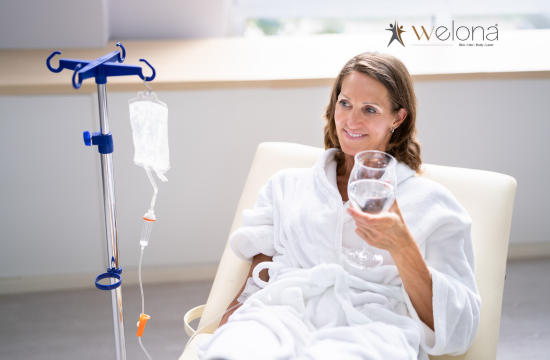
IV skin lightening therapy delivers a combination of glutathione, Vitamin C, and supporting nutrients directly into the bloodstream via an intravenous drip. By bypassing the digestive system entirely, the nutrients reach the skin cells at a significantly higher concentration than oral supplements or topical products can achieve.
Glutathione is the primary active agent. It is a naturally occurring antioxidant produced in every cell of the body, composed of three amino acids: glycine, glutamic acid, and cysteine. In the context of skin lightening, glutathione inhibits the enzyme tyrosinase, which is responsible for melanin production. It also shifts melanin synthesis from the darker eumelanin pathway toward the lighter pheomelanin pathway, leading to a gradual reduction in skin pigmentation over multiple sessions.
IV skin lightening is great for:
- Patients with systemic dullness, fatigue-related skin deterioration, or pervasive uneven tone
- Those who want to complement other skin treatments like laser toning or chemical peels
- People looking for internal skin health improvement alongside cosmetic results
- Patients who haven’t responded adequately to topical brightening treatments alone
What Are Medi Facials?
Medi facials, short for medical-grade facials, are clinical facial treatments designed and administered by dermatologists or trained skin therapists. Unlike salon facials that focus primarily on relaxation and surface hydration, medi facials use pharmaceutical-grade active ingredients at therapeutic concentrations to address specific skin conditions.
Depending on your concern, a medi facial may include a combination of:
- Chemical exfoliation using AHAs or BHAs to remove dead skin and improve cell turnover
- Enzyme-based exfoliation for sensitive skin types
- Antioxidant-rich serums, peptides, and brightening actives infused post-exfoliation
- LED light therapy to reduce inflammation and stimulate collagen
- Hydrating or calming agents to restore the skin barrier post-treatment
Medi facials are highly customizable, which is what separates them from standard salon treatments. A medi facial for pigmentation will look entirely different from a medi facial for acne-prone or dehydrated skin.
How Do Results Actually Compare?
The key difference is where and how each treatment delivers its results.
Medi facials work on the skin’s surface and mid-layers. After a single session, most patients notice improved brightness, softer texture, and a healthy glow. These results are visible quickly, often within 24 to 48 hours, but they are surface-level improvements. Without regular sessions and good home care, the results fade as new dead skin accumulates and environmental factors take their toll.
IV skin lightening works from the inside out. The effects are not immediately visible after a single session, and patients should not expect a dramatic difference after one drip. Over a structured course of sessions, typically 6 to 10 spaced a week or two apart, patients who respond well notice a progressive reduction in dullness, more even skin tone, and improved skin clarity. The results tend to be more systemic and longer-lasting when maintained, because they address melanin production at a cellular level rather than just exfoliating the surface.
Neither treatment replaces the other. They operate on different axes of skin health.
Downtime and Practical Considerations
Medi facials involve minimal to zero downtime. Some exfoliating facials may cause mild redness or sensitivity for a few hours, but most patients leave the clinic looking refreshed. Sessions typically run 45 to 90 minutes, depending on the protocol.
IV therapy sessions run 30 to 60 minutes in a clinical setting, during which the drip is administered under medical supervision. There is no downtime in the traditional sense, but patients must undergo a pre-treatment evaluation to confirm suitability. Side effects when properly administered are mild and rare, typically limited to temporary bruising at the IV site.
Why Trust Welona for IV Therapy and Medi Facial?
At Welona, both IV skin lightening and medi facials are administered as medical treatments, not cosmetic add-ons.
Medically supervised IV therapy
Welona’s glutathione IV therapy is administered only after a thorough medical evaluation. Dosing, infusion frequency, and the composition of the drip are personalised to each patient’s skin concerns, health history, and goals. This is not a walk-in drip service. It is a doctor-prescribed, clinically monitored protocol.
Customised medi facial protocols
No two patients at Welona receive the same facial. The active ingredients, exfoliation depth, and post-treatment actives are chosen based on your specific skin type, concern, and sensitivity level. A medi facial for someone with melasma will be built differently from one for someone dealing with post-acne marks or sun damage.
Honest outcomes, not overpromised results
Welona’s dermatologists are clear about what each treatment can and cannot achieve. IV therapy will not change your natural skin color, but with consistency, it will meaningfully improve clarity and reduce uneven tone. Medi facials will not address deep dermal pigmentation on their own. Knowing this distinction before you start treatment saves time, money, and disappointment.
Combination planning
For patients seeking comprehensive skin-brightening results, Welona builds integrated treatment plans that combine IV therapy, medi facials, laser toning, and home care into a structured protocol.
To Wrap It Up
IV skin lightening and medi facials are not competing treatments. They address skin brightness from different angles: one works internally at the cellular level, and the other works externally on texture, tone, and surface clarity. The better question isn’t which one works, but which one your skin needs right now, and whether a combination approach makes more sense for your goals.
At Welona Clinic, our dermatologists evaluate your skin concerns, health history, and lifestyle before recommending any skin brightening protocol.
Book Your Skin Brightening Consultation at Welona Consult with our expert dermatologists in Anna Nagar, T. Nagar, or Adyar to find the right combination of treatments for your skin goals.
FAQ: IV Therapy vs Medi Facial
How many IV skin lightening sessions do you need?
Most patients require 6 to 10 sessions spaced 1 to 2 weeks apart before noticing meaningful improvement in skin clarity and tone. Results vary based on skin type, lifestyle, sun exposure, and the severity of the concern.
What is the difference between a medi facial and a regular salon facial?
Medi facials use pharmaceutical-grade active ingredients at therapeutic concentrations and are designed by dermatologists to address specific skin conditions. Salon facials primarily focus on surface hydration and relaxation without the clinical depth of a medi facial.
Can you combine IV skin lightening and medi facials together?
Yes. Many dermatologists recommend combining both for comprehensive results, with IV therapy addressing systemic pigmentation and medi facials maintaining surface brightness and texture.
How long do medi facial results last?
Surface results from a medi facial are typically visible for 2 to 4 weeks, depending on your skin type and home care routine.