

If there is one question that our dermatologists at Welona often come across, it is which treatment should I choose between PRP and GFC for hair regrowth treatment? If you’ve started noticing more hair on your pillow, a widening part line, or thinning around the crown, you’ve probably come across both treatments while searching online. The problem is that most articles either make them sound identical or declare one the absolute winner.
The reality is more nuanced. Both treatments are designed to help struggling hair follicles. Both use your body’s own healing potential. But the treatment that’s right for you depends less on trends and more on what’s actually happening beneath your scalp.
Quick Answer
Both Growth Factor Concentrate (GFC) and Platelet-Rich Plasma (PRP) are regenerative treatments that use the patient’s own blood to stimulate hair follicles and improve hair growth. PRP has been used for several years and remains a popular option for early hair thinning. GFC is a newer, more refined treatment that delivers concentrated growth factors in a controlled manner. The right choice depends on the stage of hair loss, treatment goals, previous treatment response, and individual expectations.
Hair Loss Doesn’t Start Overnight
Before comparing treatments, it’s important to understand that hair thinning is usually a gradual process.
For months, sometimes even years, follicles become weaker before bald patches appear. Stress, genetics, hormones, nutritional deficiencies, PCOS, and age can all accelerate this process.
The encouraging part is that early-stage follicles are often still alive. They’re simply producing thinner, weaker hair. This is the stage where regenerative treatments work best.
PRP: The Treatment That Started It All
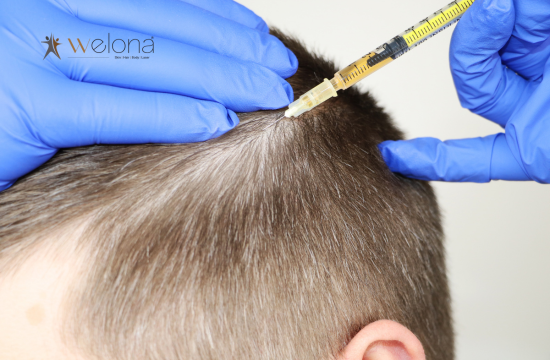
For years, PRP has been one of the most widely used regenerative treatments in dermatology. A small sample of your blood is processed to concentrate platelets, which naturally contain healing proteins and growth factors. This platelet-rich portion is then introduced into areas affected by thinning.
The idea is simple: encourage tired follicles to become active again. Many patients notice that shedding reduces first. Over the following months, hair often begins to feel stronger and fuller. PRP remains a trusted option, especially in the early stages of hair loss.
Why GFC Is Generating So Much Interest
If PRP opened the door to regenerative hair treatments, GFC refined the process. Instead of relying on platelets to release growth factors after injection, GFC isolates these growth factors beforehand and delivers them directly to the scalp.
For patients, this distinction may sound technical, but the goal is straightforward: provide follicles with concentrated regenerative signals in a more standardized way. It’s one of the reasons many dermatologists and patients have started gravitating towards GFC in recent years.
So, Which One Should You Choose for Hair Regrowth Treatment?
This is where many comparison articles oversimplify things. The truth is, the “better” treatment depends on the person sitting in front of the dermatologist. Someone in the very early stages of hair thinning may respond beautifully to PRP.
Someone with more noticeable thinning, previous experience with PRP, or a preference for a more refined approach may lean towards GFC. What matters most is not choosing the newest treatment. It’s choosing the treatment that matches your scalp’s needs.
The Bigger Question: Are Your Follicles Still Active?
This is often the deciding factor. If follicles are still functioning, regenerative treatments can support them remarkably well.
If the scalp has remained completely bald for years and follicles are inactive, the response becomes less predictable. This is why a proper scalp evaluation matters more than any online comparison chart.
What Results Can You Realistically Expect?
Neither PRP nor GFC is an overnight fix.
Hair has its own timeline.
Most patients notice:
- Reduced shedding before regrowth
- Improved hair texture and thickness
- Gradual increase in density
- Better overall scalp health
The earlier the hair regrowth treatment begins, the more favorable the outcome tends to be. A systematic review published in the Journal of Clinical Medicine found that platelet-derived therapies show promising benefits in improving hair density and reducing hair shedding in androgenetic alopecia, although treatment protocols continue to evolve.
Hair Regrowth Treatment at Welona Chennai
At Welona Skin, Hair, Body, and Laser Clinic in Chennai, treatment begins with understanding why the hair loss is happening.
Dermatologists assess:
- Scalp health
- Hair density
- Follicle activity
- Medical history
- Lifestyle factors
- Hormonal influences
Based on these findings, patients may be advised to undergo GFC, PRP, medical treatment, nutritional correction, or a combination approach. The focus is not simply on reducing hair fall but on creating a long-term strategy to support healthier hair growth.
To Wrap It Up
If you’re trying to decide between GFC and PRP, don’t think of it as choosing the “better” treatment. Think of it as finding the right fit.
Both treatments have helped countless men and women regain confidence and slow the progression of hair thinning. The biggest difference often comes down to timing, proper diagnosis, and realistic expectations.
Start early. Ask questions. Understand your options. Because when it comes to hair loss, informed decisions almost always lead to better outcomes. Contact Welona Today!
FAQ: Hair Regrowth Treatment
Is GFC better than PRP?
Not necessarily. The right treatment depends on the cause and stage of hair loss, as well as individual treatment goals.
Are PRP and GFC safe?
Yes. Both treatments use the patient’s own blood and are generally considered safe when performed by qualified dermatologists.
How many sessions will I need?
The number of sessions varies depending on the severity of hair thinning and individual response.
Can these treatments regrow completely bald areas?
They work best when follicles are still active. Long-standing bald areas may respond less predictably.
Can men and women undergo these treatments?
Yes. Both PRP and GFC are commonly used for hair thinning in men and women.