
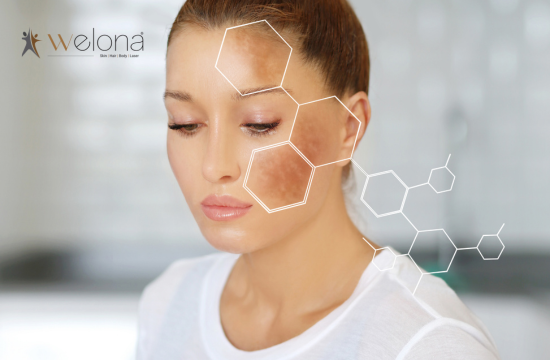
Acne scars are among the most common reasons people visit a dermatologist, even after their acne has healed. While acne scars cannot usually be removed completely, modern dermatology treatments can significantly improve their appearance by stimulating collagen production and remodeling the skin. The best treatment depends on the type, depth, and severity of the scars. Procedures such as Microneedling Radiofrequency (MNRF), CO₂ Laser Resurfacing, Subcision, and combination therapies often deliver the best results when tailored to the individual’s skin.
Can Acne Scars Be Removed Completely? A Dermatologist at Welona Explains
This is the question almost every patient asks at their first acne scar consultation. And it deserves an honest answer, not a sales pitch.
The short answer is no. Acne scars cannot be completely removed. But here’s what most people don’t hear often enough: with the right clinical treatment, the right combination of modalities, and a properly planned approach, acne scars can be significantly reduced, often to the point where they are barely noticeable in normal lighting and everyday situations.
That distinction, between complete removal and significant improvement, is what this guide is about. Understanding it before you start treatment is the difference between realistic satisfaction and expensive disappointment.
Why Acne Scars Form in the First Place
To understand why scars can’t be fully removed, it helps to understand what they actually are.
When a pimple becomes inflamed, it damages the collagen framework in the dermis, the structural layer beneath the skin’s visible surface. When the skin heals, it attempts to repair that damage by producing new collagen. This repair process is imperfect. Sometimes the body produces too little collagen, creating a depression or pit. Sometimes it produces too much, creating a raised scar. The result is tissue that is structurally different from the normal skin around it.
This is why creams, serums, and home remedies cannot remove acne scars. They work on the epidermis, the outermost skin layer, and have no meaningful access to the dermal scar tissue where the structural damage lives.
The 3 Types of Acne Scars and Why They Matter
Not all acne scars respond the same way to treatment, and not all of them respond to the same treatment. Knowing your scar type is the first thing a dermatologist will assess.
- Atrophic scars (depressed scars): The most common type, caused by insufficient collagen production during healing. These create depressions, pits, and uneven texture in the skin. There are three subtypes:
- Ice pick scars: Deep, narrow pits that look like enlarged pores. The hardest to treat because of their depth and narrow structure.
- Boxcar scars: Wide, shallow to medium-depth depressions with sharp, defined edges. Respond well to laser resurfacing and MNRF.
- Rolling scars: Broad, shallow depressions with sloping edges that create a wavy, undulating skin surface. Often caused by fibrous bands anchoring the skin from beneath, which means they require subcision to release before other treatments work properly.
Hypertrophic and keloid scars (raised scars): Caused by excess collagen production. More common on the chest, back, and shoulders than the face. Require a different treatment pathway from atrophic scars.
Post-inflammatory hyperpigmentation (PIH): Technically not a scar but a pigmentation mark left after inflammation. Often mistaken for a scar. PIH responds very well to treatment and fades significantly faster than structural scars.
Most patients have a mix of scar types on their face simultaneously, which is exactly why a single treatment is rarely sufficient for comprehensive improvement.
Treatments That Actually Work for Acne Scars in Chennai
MNRF (Microneedling Radiofrequency)
MNRF is Welona’s primary treatment for acne scars, particularly rolling scars and deeper boxcar scars. It uses insulated microneedles to deliver radiofrequency energy precisely into the dermis, stimulating collagen remodelling at the exact depth where scar tissue sits, without damaging the skin surface.
Why MNRF works particularly well for Indian skin:
- The insulated needles protect the epidermis, significantly reducing the risk of post-inflammatory hyperpigmentation
- It addresses both scar texture and skin laxity simultaneously
- Minimal downtime of 1 to 2 days compared to 5 to 7 days for CO2 laser
- Safe for all Fitzpatrick skin types including darker Indian skin tones
- Results build progressively as collagen remodelling continues for months after each session
Fractional CO2 Laser
Fractional CO2 laser creates thousands of micro-columns of controlled ablation from the surface down into the dermis, triggering significant collagen regeneration.
It is particularly effective for:
- Superficial to medium-depth boxcar scars
- Overall skin resurfacing and texture improvement
- Cases where faster per-session improvement is the priority
CO2 laser involves more downtime (5 to 7 days of redness and peeling) and carries a higher risk of post-inflammatory hyperpigmentation for darker Indian skin. At Welona, it is used selectively based on scar type and skin tone, often as part of a combination plan alongside MNRF rather than as a standalone treatment.
Subcision
This is the treatment most people with rolling scars aren’t aware of, and it’s the one that makes the biggest difference for that specific scar type.
Rolling scars are often physically tethered beneath the skin surface by fibrous bands that pull the skin inward. No laser or radiofrequency treatment can release these bands. Subcision involves a dermatologist inserting a fine needle parallel to the skin surface to mechanically cut those fibrous tethers, allowing the depressed skin to lift.
At Welona Skin, Hair, Laser and Body Clinic in Chennai, subcision is offered as a dedicated treatment for rolling scars and is frequently combined with MNRF or dermal fillers for comprehensive structural improvement.
Dermal Fillers
For patients with deep, established atrophic scars where immediate volumising improvement is needed, dermal fillers can be injected beneath the scar to lift the depressed area and provide structural support. Results are immediate and can be significant for certain scar patterns. Used alongside other modalities rather than as a standalone treatment.
Chemical Peels
Chemical peels improve cell turnover, fade post-inflammatory hyperpigmentation, and smooth out superficial textural irregularities. They are used as part of the overall scar management plan rather than as the primary treatment for structural scars, and are particularly valuable for addressing the pigmentation component of scarring alongside laser or MNRF sessions.
Combination Treatments
One of the biggest advances in acne scar treatment is combining procedures.
For example:
- Subcision + MNRF
- CO₂ Laser + MNRF
- Subcision + CO₂ Laser
- MNRF + Medical Skincare
Rather than relying on one treatment, combination therapy addresses different aspects of the scarring process. A systematic review published in the Journal of Clinical Medicine found that combination treatments, including microneedling, fractional lasers, and subcision, are among the most effective approaches for improving atrophic acne scars while promoting collagen remodeling.
Why Getting Treatment Early Makes a Significant Difference
The single most impactful thing you can do for acne scars is start treatment early. The longer scars are left untreated, the more established the scar tissue becomes and the harder it is to remodel. Scars treated within the first 6 to 12 months of formation consistently achieve better outcomes than scars of the same type treated years later.
This also means that active acne should be properly treated and controlled before scar treatment begins. Treating scars while new acne is still forming is counterproductive.
To Wrap It Up
Acne scars cannot be completely removed. Any clinic that tells you otherwise is not being clinically honest. What is true, and what the evidence clearly supports, is that significant improvement is achievable with the right combination of treatments, the right sequence, and a dermatologist who maps your specific scar types before recommending anything.
At Welona Clinic, acne scar treatment starts with understanding your scars properly, not with a default protocol applied to everyone who walks in with the same complaint.
Book Your Acne Scar Consultation at Welona Visit our expert dermatologists in Anna Nagar, T. Nagar, or Adyar for a detailed scar assessment and a personalised combination treatment plan.
FAQs
Can acne scars disappear naturally?
Most true acne scars do not disappear on their own, although post-acne pigmentation often fades gradually.
Which acne scars respond best to treatment?
Rolling and shallow boxcar scars generally respond very well to collagen-stimulating treatments. Deep ice pick scars may require specialised procedures.
Is MNRF better than CO₂ Laser?
Both treatments have their advantages. The choice depends on the type and severity of the scars, your skin type, and downtime preferences.
How soon will I see results?
Some improvement may be visible within a few weeks, but collagen remodeling continues for several months after each session.
Are acne scar treatments permanent?
The improvement achieved is generally long-lasting because it results from new collagen formation. However, treating active acne remains essential to prevent new scars from developing.