

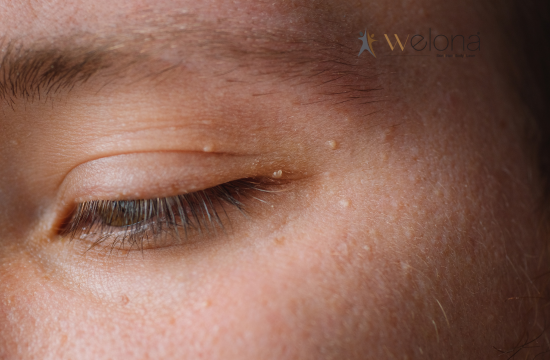
Milia are tiny white or yellowish cysts that commonly appear on the face, especially around the eyes, cheeks, nose, and forehead. They form when dead skin cells become trapped beneath the skin’s surface rather than shedding naturally. Unlike acne, milia do not contain oil or bacteria, so they do not respond to pimple creams or squeezing. While some milia disappear on their own, many persist for months or even years without treatment. Dermatologists can remove milia safely using specialized techniques that minimize the risk of scarring.
Have you ever noticed tiny white bumps on your face that just won’t go away, no matter how many skincare products you try? You switch cleansers, apply acne creams, and even try squeezing them. Yet they stay exactly where they are.
If this sounds familiar, you may have milia.
Many people mistake milia for whiteheads or pimples, but they are completely different. Since they don’t contain oil or bacteria, acne treatments rarely make any difference. The good news is that milia are harmless. The frustrating part is that they often don’t go away on their own. Let’s look at why milia develop, what causes them, and which treatments actually work.
What Are Milia?
Milia are tiny cysts filled with keratin, the protein that makes up your skin, hair, and nails. Research published in NCBI describes milia as benign keratin-filled cysts that commonly affect both children and adults. The review explains their causes, clinical features, and safe treatment options, including professional extraction when needed.
Normally, dead skin cells move to the surface and shed naturally. Sometimes, these cells become trapped beneath the skin instead. As keratin builds up, it forms a small, firm bump that appears white or cream-colored.
Milia usually measure between 1 and 2 millimeters. They feel smooth, firm, and painless. Unlike acne, they do not have an opening on the skin’s surface.
Where Do Milia Usually Appear?
Milia can develop almost anywhere on the body, but they appear most often on the face.
Common areas include:
- Around the eyes
- Eyelids
- Cheeks
- Nose
- Forehead
- Chin
Newborn babies frequently develop milia, but adults can also experience them at any age.
Why Do They Develop?
Milia form when dead skin cells become trapped rather than shed naturally. Several factors can increase the likelihood of developing them.
Natural Skin Renewal
Sometimes the skin simply doesn’t shed dead cells efficiently. As keratin builds up beneath the surface, small cysts begin to form.
Sun Damage
Years of sun exposure can thicken the outer layer of the skin and interfere with normal skin renewal. This makes it easier for keratin to become trapped.
Heavy Skincare Products
Very rich creams or thick occlusive products may contribute to milia in some people, particularly around the delicate eye area. This doesn’t mean moisturizers cause milia, but choosing products suited to your skin type can help.
Skin Injury
Burns, laser procedures, chemical peels, or skin trauma can occasionally lead to secondary milia during the healing process. These usually improve as the skin recovers.
Ageing
As skin renewal slows with age, keratin can accumulate more easily beneath the surface, making milia slightly more common in adults.
Milia vs Whiteheads: What’s the Difference?
Many people confuse milia with acne because they look similar at first glance. The difference lies beneath the surface.
Whiteheads form when oil, dead skin cells, and bacteria block a pore.
Milia form when keratin becomes trapped beneath the skin, without involving the oil glands.
Because of this difference:
- Acne products often help with whiteheads.
- Acne products rarely improve milia.
- Squeezing whiteheads may sometimes release their contents.
- Squeezing milia usually causes irritation without removing the cyst.
Understanding this difference can save months of frustration and unnecessary skincare purchases.
Why Won’t Milia Go Away?
This is the question dermatologists hear most often. Unlike pimples, milia don’t have an opening that allows the contents to drain naturally. The keratin remains enclosed beneath the skin.
Some milia disappear on their own after several weeks or months, particularly in infants. In adults, however, they often persist for much longer. Without professional treatment, some can remain unchanged for years.
Should You Try to Remove Milia at Home?
It can be tempting. After all, they look like tiny whiteheads.
However, attempting to squeeze or pierce them yourself can create more problems than it solves.
Home removal may lead to:
- Skin irritation
- Infection
- Bleeding
- Scarring
- Post-inflammatory pigmentation
The delicate skin around the eyes is particularly vulnerable. Professional removal is far safer and usually takes only a few minutes.
How Do Dermatologists Remove Milia?
Treatment depends on the number, size, and location of the cysts.
Manual Extraction
This is the most common treatment. The dermatologist creates a tiny opening using a sterile instrument and gently removes the keratin cyst. The procedure is quick, precise, and usually heals with minimal marks.
Chemical Peels
If multiple milia develop alongside rough skin texture, superficial chemical peels may help improve skin renewal and reduce future build-up. Peels do not always remove existing milia, but they can lower the chance of new ones forming.
Medical-Grade Skincare
Retinoids and gentle exfoliating ingredients can encourage healthy skin turnover and help prevent recurring milia in suitable patients. These products should only be used under professional guidance, especially around the eyes.
Can You Prevent Milia?
You can’t always prevent milia, but a few simple habits may reduce the risk.
These include:
- Wearing sunscreen every day.
- Using skincare products suited to your skin type.
- Avoiding very heavy creams unless recommended.
- Removing makeup before sleeping.
- Avoiding picking or squeezing skin lesions.
Healthy skin renewal plays an important role in preventing future build-up.
Milia Treatment at Welona Chennai
At Welona Skin, Hair and Laser Clinic, every white bump is carefully examined before treatment begins. Not every white lesion is milia. Some may be whiteheads, syringomas, sebaceous hyperplasia, or other skin conditions that require different treatment.
Once the diagnosis is confirmed, dermatologists recommend the safest removal technique based on the location and number of lesions. If recurrent milia result from your skincare routine or reduced skin renewal, your dermatologist may also recommend medical-grade skincare or chemical peels to help maintain clearer skin over time.
Final Thoughts
Milia may look like tiny pimples, but they behave very differently. Since they form beneath the skin’s surface, they rarely respond to acne creams or home remedies.
Instead of trying to remove them yourself, let a dermatologist identify the cause and recommend the safest treatment. Professional removal is quick, effective, and helps protect your skin from unnecessary irritation or scarring. Book your consultation today!
FAQs
Are milia the same as acne?
No. Milia contain trapped keratin, while acne develops when pores become blocked with oil, dead skin cells, and bacteria.
Can milia disappear naturally?
Yes. Some milia clear on their own, but many adults find that they persist for months or even years.
Is milia removal painful?
Most patients experience little discomfort. The procedure is quick and usually finishes within a few minutes.
Can I squeeze milia myself?
No. Home removal increases the risk of infection, scarring, and pigmentation, especially around the eyes.
Will milia come back after removal?
The treated milia usually do not return. However, new milia can develop later if your skin remains prone to trapping keratin.