
Laser Hair Reduction has become one of the most searched aesthetic treatments across the world. And rightfully so, as the treatment is a great alternative to shaving, waxing, and threading. From unwanted facial hair to underarms, bikini line, and full body hair, many people today consider lasers as a long-term solution.
Laser hair reduction is often promoted as a permanent solution to unwanted hair, but the truth is more nuanced than these advertisements. Many people start the treatment expecting hair to disappear forever, and feel confused when they notice some regrowth over time. This leads to an important question – is Laser Hair Reduction really permanent?
To find an honest answer, we reached out to our expert dermatologist at Welona to understand the medical truth about laser hair reduction, how it works for Indian skin tones, and what you can realistically expect. In this article, our dermatologist explains the truth behind Laser Hair Reduction.
The Laser Hair Reduction Permanent – Myth vs. Reality
Let’s start by clarifying the terminology. According to the U.S. Food and Drug Administration (FDA), laser hair removal is defined as “permanent hair reduction,” not “permanent hair removal.”
What’s the difference?
- Permanent Removal: This simply means not a single hair will ever grow back in that area again, forever. (Electrolysis is the only method that claims this, but it is incredibly slow and painful.)
- Permanent Reduction: This means a significant, stable decrease in the number of hairs regrowing.
The Expert Verdict
Most patients at Welona Clinic in Chennai experience a 70% to 90% reduction in hair growth after completing their recommended sessions. The few hairs that do grow back are typically very fine, light-colored, and barely noticeable, often referred to as “peach fuzz.”
So, while you might not be 100% hair-free forever, you will be free from the monthly salon visits, the pain of waxing, and the tedious process of shaving.
Why Laser Cannot Remove All Hair Permanently
Our dermatologist at Welona explained this based on hair biology. Laser hair reduction works on the principle of Selective Photothermolysis. The laser emits a concentrated beam of light that is absorbed by the pigment (melanin) in your hair. This light energy converts to heat, traveling down the hair shaft to damage the follicle, inhibiting future growth.
However, your hair goes through three growth phases:
Phase 1: Anagen (Growth Phase): The hair is actively growing and attached to the root. Lasers are only effective in this phase.
Phase 2: Catagen (Transition Phase): The hair follicle shrinks and detaches.
Phase 3. Telogen (Resting Phase): The hair sheds, and the follicle stays dormant.
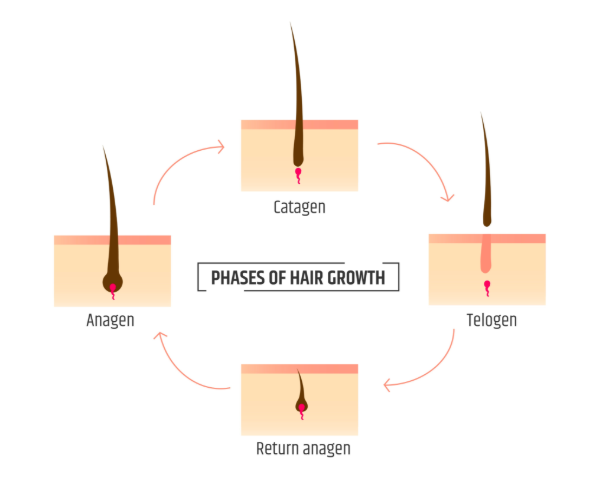
At any given time, only about 20% of your hair is in the Anagen phase. This means one laser session only destroys that specific 20%. To catch every hair in its growth phase, you need multiple sessions spaced 4–6 weeks apart.
At any given time, only a portion of your hair is in this active phase. This is why:
- Multiple sessions are required
- Some follicles remain unaffected initially
- Maintenance sessions may be needed
Moreover, Hormones Can Reactivate Follicles
Hormonal changes due to:
- PCOS
- Pregnancy
- Thyroid imbalance
- Menopause
These can stimulate dormant follicles, leading to some regrowth even after successful laser treatment. Even in these cases, laser hair reduction treatment still provides a visible reduction when done with the right technology and medical supervision.
Laser Hair Reduction vs Waxing and Shaving
Here is why many of our clients choose laser over waxing and shaving:
| Method | Results | Long-Term Benefits |
| Shaving | Temporary | None |
| Waxing | Temporary | None |
| Epilator | Temporary | None |
| Laser Hair Reduction | Long-Term Reduction | Significant |
Is Laser Hair Reduction Safe for Indian Skin?
Our dermatologist often comes across myths like laser burns darker skin or that it is not suitable for Indian skin types. However, this is outdated information. Today, with advanced technology, at Welona Clinic in Chennai, we use FDA-approved Diode and Nd: YAG lasers. These are the “Gold Standard” for Indian skin because they have longer wavelengths that bypass the skin’s surface pigment to target the hair follicle safely, without causing burns or pigmentation issues.
However, only when performed under a dermatologist’s supervision, laser hair reduction is considered very safe.
Common temporary effects include:
- Mild redness
- Warm sensation
- Slight swelling around follicles
These usually settle within a few hours.
Serious side effects like burns or pigmentation are rare and usually occur when:
- The wrong laser is used for the skin type
- Incorrect settings are applied
- Treatment is done without medical oversight
Why a Dermatology Clinic Like Welona Skin, Hair, Body, and Laser Clinic Makes a Difference
At Welona, laser hair reduction is treated as a medical aesthetic procedure, not a cosmetic service.
Key reasons this matters:
- Dermatologist-led assessment before starting treatment
- Selection of laser technology suitable for Indian skin
- Customised energy settings for each area
- Special protocols for hormonal hair growth and PCOS
- Strict safety and hygiene standards
- Honest guidance on expectations and maintenance
This approach ensures better results, fewer side effects, and long-term satisfaction.
Client Success Story at Welona
Watch our client testimonial from Welona Clinic, discussing her positive experience with Laser Hair Removal and Skin Rejuvenation, proving the trust and results you can expect.
To Wrap It Up
While “permanent” might be a slight misnomer, the results of Laser Hair Reduction are life-changing. Imagine waking up in Chennai’s summer without worrying if you shaved your underarms. Imagine wearing that sleeveless dress to a wedding without a second thought.
At Welona Clinic, we don’t just remove hair; we restore confidence.
Ready to ditch the razor? Book a consultation with our experts today. Let us help you achieve the smooth, carefree skin you deserve.
Call Us: 044 4011 4444
FAQ: Laser Hair Reduction
Does laser hair removal darken the skin?
No. In fact, it often lightens the skin! Shaving and waxing cause friction and micro-trauma, leading to hyperpigmentation (dark underarms). Laser removes this trauma, often resulting in smoother, brighter skin in the treated area.
Can I shave between sessions?
Yes! Shaving is the only recommended hair removal method between laser sessions. You must avoid plucking, waxing, or threading, as these remove the hair root that the laser needs to target.
Is it safe for the face?
Absolutely. It is highly effective for women with PCOS-related facial hair growth (hirsutism). However, because facial hair is hormonal, you may require maintenance sessions more frequently than for body hair.
How many sessions will I need?
For most Indian hair types, we recommend 6 to 8 sessions of laser hair reduction for optimal results, followed by a maintenance session once or twice a year.
Are there side effects?
Immediate side effects may include mild redness or swelling, which looks like goosebumps. This is a good sign that the follicle was hit! It typically subsides within an hour.