Pigmentation is one of the most common skin concerns in India, and if you’ve been looking into treatment options, you’ve likely come across two names repeatedly: laser toning and chemical peels. Both are clinically proven and are widely used. But they work very differently, and choosing the wrong one for your skin type or pigmentation type can mean slow results, irritation, or even worsening the concern.
Experts at Welona in Chennai explain how each treatment works, which conditions they’re best suited for, and how to decide between them based on your skin.
Quick Answer: Laser Toning vs Chemical Peels for Pigmentation
Laser toning uses targeted light energy to break down excess melanin deep within the skin without damaging the surface. Chemical peels use acids to exfoliate the outer skin layers and fade surface-level pigmentation. Laser toning is better suited for deep or stubborn pigmentation, melasma, and Indian skin types. Chemical peels work well for mild to moderate surface pigmentation, uneven tone, and dull skin. Laser toning requires zero downtime; medium-depth peels may involve 3 to 7 days of peeling. Both require multiple sessions. In some cases, combining both gives the best long-term result.
What Is Laser Toning?
Laser toning is a non-ablative, non-invasive treatment that uses a Q-switched Nd: YAG laser to target and break down excess melanin beneath the skin’s surface. Unlike ablative lasers that remove the top layer of skin, laser toning works at a cellular level without causing visible epidermal damage.
When the laser energy reaches the skin, it is absorbed by pigment clusters. These clusters are broken down into microscopic particles, which the body’s lymphatic system gradually clears over time. The result is a progressive reduction in dark spots, uneven tone, melasma, and post-inflammatory hyperpigmentation.
Laser toning is particularly well suited for Indian skin types (Fitzpatrick IV and V) because it uses controlled, low-intensity energy that reduces the risk of triggering new pigmentation. It is one of the most recommended treatments for pigmentation in tropical climates like Chennai, where sun exposure and humidity constantly challenge skin clarity.
Key benefits of laser toning:
- Targets deep dermal pigmentation that creams and peels cannot reach
- Zero to minimal downtime, most patients resume normal activity the same day
- Safe for Indian skin when performed under expert supervision
- Stimulates collagen production alongside pigment correction
What Are Chemical Peels?
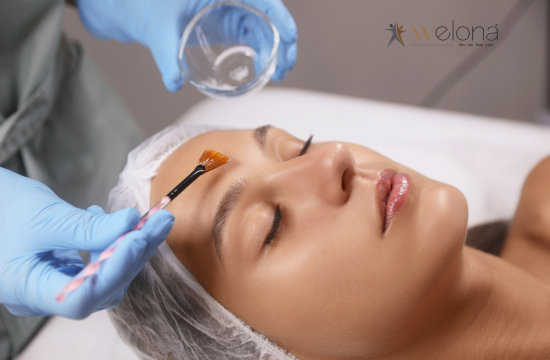
Chemical peels involve applying an acid solution to the skin to remove damaged outer layers and encourage new cell turnover. Depending on the depth of the peel, they can address everything from mild surface dullness to moderate pigmentation and acne marks.
The three main types used for pigmentation are:
- Superficial peels (glycolic acid, lactic acid, salicylic acid): Work on the outermost skin layer, mild exfoliation, no real downtime, suitable for mild pigmentation and overall brightening
- Medium peels (TCA, Jessner’s solution): Penetrate deeper, more effective for stubborn pigmentation and sun damage, 3 to 7 days of peeling and redness expected
- Deep peels: Rarely used for pigmentation alone, primarily for resurfacing and scar correction
Chemical peels are effective, affordable, and widely accessible. For surface-level concerns like mild sun tan, early post-acne marks, and general dullness, they deliver visible improvement relatively quickly.
How Do They Compare for Different Types of Pigmentation?
Not all pigmentation is the same, and this is where the choice between laser and peels becomes critical.
Melasma
This hormonally triggered, deep pigmentation is one of the most challenging conditions to treat. Chemical peeling is a well-established method for managing melasma, and research has shown that combining laser toning with a modified Jessner peel can improve outcomes compared with laser toning alone, particularly for patients who show limited response to single-modality treatment. However, for Indian skin, aggressive peeling carries a risk of post-inflammatory hyperpigmentation, which is why laser toning is often the safer first choice.
Post-acne marks and sun spots
Both treatments work well here. Superficial peels can lighten post-acne marks effectively over a series of sessions. Laser toning tends to deliver faster and more precise results, especially for darker or deeper marks.
Overall dullness and uneven tone
Chemical peels have an edge here. A well-chosen superficial peel improves texture, brightness, and tone in fewer sessions and at a lower cost per session.
Deep dermal pigmentation
This is where laser toning wins clearly. Peels, even medium-depth ones, cannot reliably reach pigment that sits in the deeper layers of the dermis. Laser toning is the appropriate modality here.
Speed of Results: Which Works Faster?
For surface pigmentation and dullness, a medium peel can deliver noticeable brightness within 7 to 10 days of the first session. For deeper pigmentation, laser toning typically requires 4 to 6 sessions before significant improvement is visible, as the body needs time to clear the broken-down melanin particles naturally.
In terms of overall treatment timelines, laser toning requires 6 to 8 sessions spaced 2 to 4 weeks apart for optimal results. Chemical peels for pigmentation typically require 4 to 6 sessions, depending on the type and severity of the concern.
Downtime and Comfort
This is a meaningful difference between the two treatments.
Laser toning involves virtually no downtime. There may be mild redness or warmth for 30 to 60 minutes post-session, after which patients can apply sunscreen and return to normal activities. The procedure itself feels like a mild, warm prickling sensation on the skin.
Chemical peels vary significantly by depth. Superficial peels may cause mild flaking for 2 to 3 days. Medium peels involve visible peeling, redness, and sensitivity for up to a week. This makes peels less convenient for patients who cannot take time away from work or social commitments.
Which Is Better for Indian Skin?
Indian skin is more prone to post-inflammatory hyperpigmentation, meaning that aggressive treatments can sometimes worsen pigmentation rather than improve it. This makes careful treatment selection critical.
Laser toning, particularly with Q-switched Nd: YAG technology, is widely regarded as one of the safest options for darker skin tones. It delivers energy in short, controlled bursts that minimize heat buildup and reduce the risk of triggering new pigmentation. Chemical peels can be safely used on Indian skin, but the acid concentration, depth, and peel type must be carefully selected by a trained dermatologist.
Why Get Pigmentation Treatment at Welona?
At Welona, pigmentation treatment is never a one-size-fits-all approach. Here’s what sets the Welona experience apart.
Dermatoscope-guided assessment
Before any treatment begins, Welona’s MD dermatologists use a dermatoscope to evaluate the exact depth and type of your pigmentation. This determines whether your concern is epidermal, dermal, or mixed, which directly dictates whether laser toning, a chemical peel, or a combination of both is the right approach.
Advanced laser technology
Welona uses TriBeam laser technology with Rich-PTP (Photoacoustic Twin Pulse), which splits laser energy into two rapid consecutive pulses. This creates a photoacoustic shockwave that shatters deep melanin clusters without excessive heat buildup, making it especially effective and safe for Indian skin types.
Customized peel protocols
When chemical peels are recommended, Welona’s specialists select the acid type, concentration, and depth based on your specific skin concern, tone, and sensitivity.
Combination therapy, where needed
For complex or stubborn pigmentation, Welona dermatologists may recommend a sequenced combination of laser toning and chemical peels, designed to target both surface and deep pigmentation simultaneously for faster, more sustained results.
To Wrap It Up
Both laser toning and chemical peels have a legitimate place in pigmentation treatment. The right choice depends on the type and depth of your pigmentation, your skin tone, your downtime availability, and your treatment goals. What rarely works is self-selecting a treatment based on what’s popular or what worked for someone else.
At Welona Clinic, our dermatologists evaluate your pigmentation at the root level before recommending any treatment, so every session is targeted, safe, and moving you toward a measurably clearer complexion.
Book Your Pigmentation Consultation at Welona Consult with our expert dermatologists in Anna Nagar, T. Nagar, or Adyar to find out whether laser toning, a chemical peel, or a combination of both is right for your skin.
FAQs: Laser Toning Vs Chemical Peels
Is laser toning better than chemical peels for pigmentation?
It depends on the type and depth of pigmentation. Laser toning is more effective for deep or stubborn pigmentation and melasma. Chemical peels work better for surface-level concerns and overall dullness. A dermatologist can assess what is appropriate for your skin.
How many laser toning sessions do I need for pigmentation?
Most patients require 6 to 8 sessions spaced 2 to 4 weeks apart, though this varies depending on the severity and type of pigmentation.
Are chemical peels safe for Indian skin?
Yes, when performed by a trained dermatologist using the right type and concentration of peel. Superficial peels are generally safe for all skin tones. Medium and deep peels need more careful selection to avoid triggering post-inflammatory hyperpigmentation.
How long does it take to see results from pigmentation treatment?
Surface pigmentation treated with peels may show improvement within 1 to 2 weeks. Laser toning for deeper pigmentation typically shows visible results after 4 to 6 sessions as the body gradually clears the broken-down melanin.