
If you have been shaving, waxing or threading for years, laser hair reduction can almost sound too convenient. A few sessions and unwanted hair gradually becomes finer, lighter and much less noticeable.
But what is the laser actually doing beneath your skin?
Laser hair reduction is not simply “burning away” visible hair. It works by using carefully controlled light energy to target the pigment in the hair and damage the follicle responsible for producing it. Understanding how this process works can also explain why you need multiple sessions, why results differ from person to person and why choosing the right laser for your skin type matters
The Science Behind Laser Hair Reduction
Laser hair reduction works through a principle called selective photothermolysis. Although the term sounds complicated, the process is relatively straightforward.
The laser delivers light at a selected wavelength. Melanin, the pigment present in hair, absorbs this energy and converts it into heat. The heat affects structures within the hair follicle that are involved in future hair growth.
When the appropriate amount of energy reaches the follicle, its ability to produce new hair may be reduced. Repeated treatments can therefore lead to progressively less hair growth.
A Study conducted by ncbi that explains the principle of selective photothermolysis and the role of melanin as a target for laser hair reduction.
The aim is to affect the follicle while minimising unnecessary injury to the surrounding skin. This is why wavelength, energy settings, cooling, and professional assessment are important.
Hair Growth Cycles and the Need for Multiple Sessions
Hair does not grow continuously or at the same time. Each follicle moves through different stages of a natural growth cycle.
Anagen is the active growth phase, when the hair is growing and remains connected to the follicle. Catagen is the transitional phase, when active growth slows. Telogen is the resting phase before the hair eventually sheds.
Laser hair reduction is generally most effective when hair is in the active growth phase because the hair contains pigment that can absorb the laser energy and help deliver heat to the follicle.
However, not every hair is in the same stage during an appointment. A single session therefore cannot effectively target every follicle in the treatment area.
Sessions are spaced apart so that additional hairs can be treated as they enter a suitable growth phase. The number and timing of sessions depend on the treatment area, hair characteristics, and individual response.
Long-Term Hair Reduction and Realistic Results
The term “laser hair removal” is commonly used, but laser hair reduction is often a more accurate description of the expected outcome.
The objective is a significant, long-term reduction in unwanted hair rather than a guarantee that every hair will disappear permanently.
After an appropriate treatment course, many people notice slower growth, reduced hair density, and finer or softer regrowth. This can reduce the need for frequent shaving, waxing, or threading.
Some follicles may stop producing visible hair, while others may continue to produce finer hair or become active again over time. Hormonal changes and individual hair-growth patterns can also influence regrowth.
Occasional maintenance sessions may therefore be recommended for some patients.
Skin Tone, Hair Colour, and Treatment Suitability
The effectiveness and safety of laser hair reduction depend on both the hair and the surrounding skin.
Because melanin absorbs laser energy, darker, coarser hair generally provides a more effective target than very light, grey, or white hair. Hair thickness, density, and colour can all influence the expected response.
Skin tone is equally important. Melanin is present in the skin as well as the hair, so inappropriate wavelengths or aggressive settings can increase the risk of unwanted skin effects.
For Indian skin, suitable technology and carefully selected treatment parameters are particularly important. Long-pulsed Nd lasers, for example, may be considered for darker skin phototypes because of their wavelength characteristics, while diode lasers may also be suitable in selected circumstances.
There is no single laser setting that is appropriate for everyone. A professional assessment should consider your skin tone, hair colour, hair thickness, treatment area, and relevant medical or hormonal factors before treatment begins.
Common Treatment Areas
Laser hair reduction can be performed on many areas of the face and body where unwanted hair is a concern.
Common treatment areas include:
- Face, upper lip, and chin
- Underarms
- Arms and legs
- Back and chest
- Bikini area
The treatment plan may vary between areas because hair thickness, density, growth cycles, and skin sensitivity are not the same throughout the body.
For example, facial hair influenced by hormonal factors may respond differently from underarm or leg hair. A personalised assessment helps establish realistic expectations for each area.
The Treatment Experience and Gradual Results
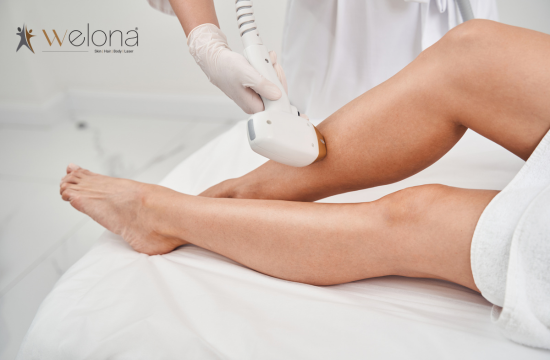
During a laser hair reduction session, a practitioner guides the laser handpiece across the treatment area and delivers controlled pulses of energy.
You may experience a brief warm or snapping sensation with each pulse. Cooling methods may be used to improve comfort and help protect the skin.
The time required depends on the size of the treatment area. A small facial area generally takes less time than full legs or larger body areas.
After treatment, temporary redness, warmth, or mild sensitivity may occur around the treated follicles. These effects commonly settle, although recovery varies between individuals.
Some treated hairs may shed naturally in the days or weeks following a session. With subsequent treatments, hair may take longer to grow back, appear in fewer areas, or become finer.
Results develop gradually. The number of sessions required depends on hair thickness, skin tone, treatment area, hormonal factors, growth cycles, technology, and individual response.
Safety, Preparation, and Aftercare
Laser hair reduction is a medical aesthetic procedure, and appropriate assessment and treatment settings are important.
Temporary redness and sensitivity are relatively common. Less common complications may include burns, blistering, pigmentary changes, or scarring, particularly when unsuitable settings are used or aftercare instructions are not followed.
Before treatment, your practitioner should review your medical history, skin and hair characteristics, relevant medications, and any factors that may affect suitability. A patch test may be recommended where appropriate.
Your aftercare instructions may include keeping the skin clean, avoiding unnecessary heat and sun exposure, using suitable sun protection, and temporarily avoiding irritating skincare products.
Shaving is generally preferred between sessions because it removes hair above the skin without pulling it from the follicle. Waxing, threading, and plucking are usually avoided because they remove the hair that the laser needs to target.
Follow your practitioner’s specific preparation and aftercare instructions. If you experience severe pain, blistering, significant swelling, or other concerning symptoms, contact your treating healthcare professional promptly.
Personalised Laser Hair Reduction at Welona Chennai
Effective laser hair reduction depends on more than the machine being used. The technology, settings, treatment timing, and individual skin and hair characteristics all influence the treatment plan.
At Welona Skin, Hair, Laser, and Body in Chennai, laser hair reduction begins with an assessment of your skin, hair characteristics, and treatment goals.
Welona offers laser hair reduction using Nd and diode laser platforms, with treatment parameters selected according to individual requirements. The aim is to provide progressive, long-term hair reduction while prioritising skin safety.
Whether you are concerned about unwanted hair on your face, underarms, arms, legs, back, or bikini area, a personalised consultation can help determine which approach may be suitable.
You can learn more about laser hair reduction treatment at Welona or explore Welona’s skin, hair, and laser treatments.
Final Thoughts
Laser hair reduction works by using controlled light energy to target melanin within the hair and affect the follicle responsible for future growth.
Over a series of appropriately spaced sessions, this can lead to a significant, long-term reduction in unwanted hair. However, results vary, and complete or permanent removal of every hair should not be promised.
The right treatment plan should be based on your skin tone, hair characteristics, treatment area, and individual goals.
Book an appointment with Welona Experts today to find out which laser hair reduction plan may be suitable for your skin and hair.
Frequently Asked Questions
1. Is laser hair reduction permanent?
Laser treatment can provide long-term reduction in hair growth. Many treated hairs may stop growing, while others may eventually return finer or lighter. Hormonal changes and individual hair-growth patterns can influence future regrowth, so occasional maintenance sessions may be recommended.
2. How many laser hair reduction sessions do I need?
There is no single number that applies to everyone. Multiple sessions are generally required because laser treatment is most effective on hairs in their active growth phase. Hair thickness, skin type, treatment area, hormonal factors, and individual response can influence the number of sessions required.
3. Is laser hair reduction safe for Indian skin?
Laser hair reduction can be performed on Indian skin when suitable technology, wavelengths, and treatment settings are selected according to the individual’s skin tone. Professional assessment and appropriate aftercare are important because darker skin phototypes may have a greater risk of pigmentary complications.
4. Can I shave between laser hair reduction sessions?
Yes. Shaving is generally preferred between sessions because it removes hair above the skin without pulling it from the follicle. Waxing, threading, and plucking are usually avoided because laser treatment relies on pigment associated with the hair follicle as its target. Follow your practitioner’s specific instructions about when to shave before and after treatment.