

Hair loss affects more men in Chennai than most people realize. By the age of 30, roughly one in four Indian men shows visible signs of hair thinning. By 50, that number climbs significantly higher. Yet most men spend years trying to manage it with shampoos, oils, and supplements before sitting down with a dermatologist and getting a real answer.
This guide covers everything a man in Chennai needs to know about hair loss: why it happens, what type you might have, which treatments actually work, and what a proper clinical approach looks like. No fluff, no false promises.
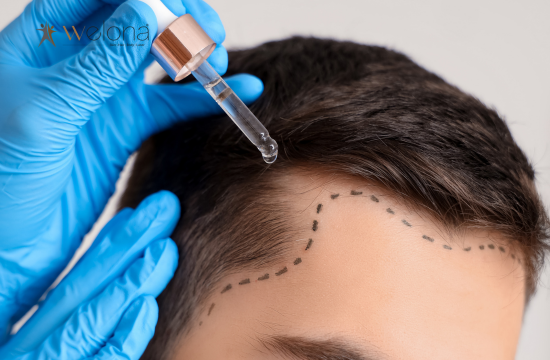
Quick Answer: Hair Loss Treatment for Men in Chennai
Male hair loss is most commonly caused by androgenetic alopecia, a genetic sensitivity to DHT that causes hair follicles to progressively miniaturize and stop producing hair. It is the most treatable type of hair loss when caught early. The most effective treatments currently available in Chennai are GFC, PRP, topical minoxidil, oral finasteride or dutasteride, and FUE hair transplant surgery for advanced cases. Combination treatment consistently outperforms any single modality alone. The earlier treatment starts, the better the outcome. A dermatologist’s evaluation is essential before starting any treatment, as different causes require different approaches.
Why Men Lose Hair: The Real Reason
Most men attribute their hair loss to stress, diet, or pollution. These can contribute, but the primary driver for the vast majority of men is genetics.
Male androgenetic alopecia (male pattern baldness) is caused by a genetic sensitivity to dihydrotestosterone (DHT), a hormone derived from testosterone. In men who carry this genetic predisposition, DHT binds to receptors in hair follicles, causing them to progressively shrink. Each hair growth cycle produces a thinner, shorter, weaker hair than the last, until eventually the follicle stops producing hair altogether.
This process is gradual, predictable, and follows a well-documented pattern, which is exactly why it is also the most well-researched and best-treated type of hair loss in dermatology.
The key insight most men don’t have early enough: once a follicle completely stops functioning, it cannot be revived. Treatment works on living, weakened follicles, not dead ones. This is why starting early matters more than almost anything else.
The Most Common Types of Hair Loss in Men
While androgenetic alopecia is the most prevalent, it is not the only type. Getting the right diagnosis matters because treating the wrong type produces no results.
Androgenetic Alopecia: DHT-driven follicle miniaturization following the classic Norwood pattern. Responds well to finasteride, minoxidil, GFC, PRP, and FUE transplant, depending on the stage.
Telogen Effluvium: Sudden, diffuse shedding triggered by a physiological shock such as illness, post-COVID recovery, crash dieting, thyroid imbalance, severe stress, or nutritional deficiency. Generally, it is reversible once the trigger is identified and corrected. Often misdiagnosed as early pattern baldness.
Alopecia Areata: An autoimmune condition causing sudden patchy hair loss. Completely different treatment pathway from androgenetic alopecia. Requires immunomodulatory treatment.
Traction Alopecia: Hair loss caused by repeated mechanical tension from tight hairstyles or extensions. Reversible if caught early and tension is removed. Progressive if ignored.
The clinical evidence on male hair loss treatment is among the most robust in dermatology, because androgenetic alopecia in men has been studied extensively for decades.
A landmark long-term clinical trial published on PubMed found that finasteride 1mg daily treatment led to a 93% decrease relative to placebo in the five-year likelihood of developing further visible hair loss in men with androgenetic alopecia, with improvements corroborated by both investigator assessments and photographic analysis.
Hair Loss Treatments for Men in Chennai: What’s Available
GFC (Growth Factor Concentrate)
Currently, the most advanced non-surgical regenerative treatment is available in Chennai. GFC uses your own blood to extract a highly purified concentration of growth factors, which are injected directly into the scalp at follicle depth.
What makes GFC particularly suited for men with pattern baldness:
- Delivers 3 to 5 times higher growth factor concentration than standard PRP
- Targets follicles that are weakening but still active, stimulating recovery before miniaturization is complete
- Shows earlier results than PRP, typically within 2 to 4 sessions
- Combines well with medical therapy for comprehensive results
- Minimal discomfort, zero downtime
PRP (Platelet-Rich Plasma)
PRP remains one of the most well-researched regenerative treatments for male hair loss and is particularly effective in the early stages. It works by delivering growth-factor-rich plasma into the scalp to stimulate follicle activity, improve blood supply, and strengthen existing hair.
What men considering PRP should know:
- 6 to 8 sessions needed for optimal results
- Works best when combined with topical minoxidil
- Ideal for Grade I to III androgenetic alopecia
- Safe, uses your own blood, no risk of allergic reaction
- Results are gradual and cumulative, not immediate
Topical and Oral Medical Therapy
Medical therapy forms the foundation of most male hair loss treatment plans in Chennai, used alongside regenerative treatment rather than instead of it.
- Topical minoxidil prolongs the hair growth phase and increases blood supply to follicles. Most effective when combined with finasteride or regenerative treatment.
- Oral finasteride (1mg daily) directly blocks DHT production, addressing the root hormonal cause of androgenetic alopecia. Clinically proven to slow progression and improve hair growth in the majority of men.
- Oral dutasteride is a more potent DHT blocker than finasteride and is increasingly used for men who don’t respond adequately to finasteride. Prescribed and monitored by a dermatologist.
- Topical minoxidil-finasteride combination is now supported by strong 2025 clinical data as the most effective topical option for male AGA.
Note: These medications must be taken under a dermatologist’s supervision only.
Mesotherapy
Mesotherapy involves injecting a customized mix of vitamins, minerals, and amino acids directly into the scalp to nourish hair follicles from within. Particularly useful for men whose hair loss has a nutritional or circulatory component alongside or instead of androgenetic alopecia. Often incorporated into combination treatment plans.
FUE Hair Transplant
For men at Grade V and above, where follicles in affected areas are no longer active, FUE (Follicular Unit Extraction) hair transplant surgery is the most appropriate solution.
Key things men should know about FUE hair transplant in Chennai:
- Individual follicular units are extracted from the donor area (the back and sides of the scalp) and implanted into bald or thinning areas.
- Results are permanent in the transplanted area, as donor follicles are not DHT-sensitive.
- Post-transplant PRP or GFC sessions significantly improve graft survival and protect native hair.
- Medical therapy (finasteride or minoxidil) should continue post-transplant to protect non-transplanted follicles.
- Not suitable as a standalone solution without addressing the ongoing DHT-driven miniaturization in remaining follicles.
Why Welona Is the Right Choice for Hair Loss Treatment for Men in Chennai
At Welona, hair loss treatment for men is built around clinical accuracy from the first consultation. With clinics across the city, Welona’s dermatologists see a high volume of male hair loss patients across all stages and have deep experience with the specific patterns and triggers common in Chennai’s population.
What sets Welona’s approach apart for men:
- Trichoscopy-based scalp assessment before any treatment is recommended, evaluating follicle density, miniaturization stage, and scalp health, rather than making a visual judgment
- Blood investigation guidance to identify nutritional, hormonal, or thyroid factors before starting treatment, ensuring the plan addresses the full picture
- GFC as the primary regenerative option for men in the active thinning window, with PRP used for earlier-stage cases and post-transplant recovery
- Honest Norwood staging with clear communication about what improvement is realistic at your specific grade, rather than overpromised results
- FUE hair transplant for advanced cases, performed by experienced surgeons with post-transplant regenerative support built into the recovery plan
- Combination treatment protocols that integrate GFC or PRP with finasteride or minoxidil and scalp care for the most comprehensive and lasting results
To Wrap It Up
Male hair loss is not inevitable, and it is not something you have to simply accept. With the right clinical diagnosis, the right combination of hair loss treatments for men, and an early start, significant improvement in hair density and meaningful slowing of further loss is very achievable. The biggest mistake is waiting. The window for effective treatment is widest when follicles are still present and weakened, not after they’ve stopped functioning entirely.
At Welona Clinic, our dermatologists assess your hair loss stage, scalp health, and lifestyle before recommending a treatment plan tailored to your hair and goals.
Book Your Hair Loss Consultation at Welona. Visit our expert dermatologists in Anna Nagar, T. Nagar, or Adyar for a detailed scalp analysis and a personalized hair loss treatment plan.
FAQs: Hair Loss Treatments for men
What is the best hair loss treatment for men in Chennai?
For early to moderate androgenetic alopecia, GFC or PRP combined with topical minoxidil and oral finasteride is the most clinically supported combination approach. For advanced baldness with inactive follicles, FUE hair transplant surgery is the appropriate option. A dermatologist’s assessment is essential before starting any treatment.
At what age does male hair loss start in India?
Male pattern baldness can begin as early as the late teens or early twenties in men who are genetically predisposed. A noticeable recession at the temples or thinning at the crown in your twenties is a strong signal to start treatment early, while the treatment window is fully open.
How many GFC sessions does a man need for hair regrowth?
Most men require 4 to 6 GFC sessions, spaced 4 to 6 weeks apart. Visible reduction in shedding is typically noticed by sessions 2 to 3, with improved density developing over 3 to 6 months. Maintenance sessions every 6 to 12 months sustain results long term.
Is hair transplant the only option for advanced hair loss in men?
For men with Norwood Grade V to VII hair loss, where follicles in affected areas are no longer active, the FUE hair transplant is the most effective option. However, medical therapy and regenerative treatment should continue alongside and after the transplant to protect remaining native hair and improve graft survival.