If you’ve been waxing regularly for years and are wondering whether it’s quietly doing more harm than good to your skin, that instinct isn’t wrong. Waxing removes hair temporarily, but what it does to the skin in the process is a conversation most salons aren’t having with their clients.
Laser hair reduction, now one of the most popular dermatology treatments in Chennai, offers a very different long-term picture. Not just for hair removal, but for what it means for your skin health over time. This breakdown covers both treatments honestly, including the clinical evidence on long-term skin impact, so you can make an informed decision rather than a habitual one.
Quick Answer: Laser Hair Reduction vs Waxing
Waxing removes hair from the root by mechanically pulling it out, causing repeated trauma to the skin and hair follicles. Over time, regular waxing can lead to post-inflammatory hyperpigmentation, folliculitis, ingrown hairs, skin thickening, and increased skin sensitivity, particularly in Indian skin tones. Laser hair reduction uses targeted light energy to damage hair follicles at their roots, gradually reducing hair growth over a series of sessions. It does not involve repeated skin trauma, does not cause PIH when performed correctly with the right laser and settings, and results in smoother, healthier skin over time. For long-term skin health, dermatologists consistently recommend laser hair reduction over waxing, especially for people with darker skin tones prone to pigmentation.
What Happens to Your Skin When You Wax
Waxing feels routine because it is routine. Every few weeks, the wax goes on, the strip comes off, and the hair goes with it. What most people don’t see is what’s happening beneath the skin.
When wax is applied and pulled off, it doesn’t just remove hair. It also mechanically strips the top layer of skin cells, forcibly ruptures the hair follicle opening, and triggers an immediate inflammatory response. The skin reddens, the follicle is exposed and vulnerable, and for people with Indian skin tones (Fitzpatrick types IV and V), that inflammation has a well-established tendency to leave behind something far more persistent: post-inflammatory hyperpigmentation.
A clinical study published on PMC noted that waxing can result in adverse skin consequences, including severe skin irritation leading to post-inflammatory hyperpigmentation, epidermal abrasion, ingrown hairs, folliculitis, and contact dermatitis, particularly in sensitive areas. Welona
Repeat this process every three to four weeks, year after year, and the cumulative skin impact is significant. Areas like the underarms, bikini line, upper lip, and legs are especially vulnerable because they are waxed most frequently and are more prone to friction, sweating, and sun exposure between sessions, all of which compound the pigmentation damage.
The most common long-term skin effects of regular waxing include:
- Post-inflammatory hyperpigmentation, particularly in the underarms, inner thighs, and bikini area
- Chronic folliculitis from repeated follicle trauma and bacterial entry
- Persistent ingrown hairs that worsen over time as hair texture changes
- Skin thickening and roughness from repeated epidermal stripping
- Increased skin sensitivity and reactivity with each session
What Laser Hair Reduction Does to Your Skin Instead
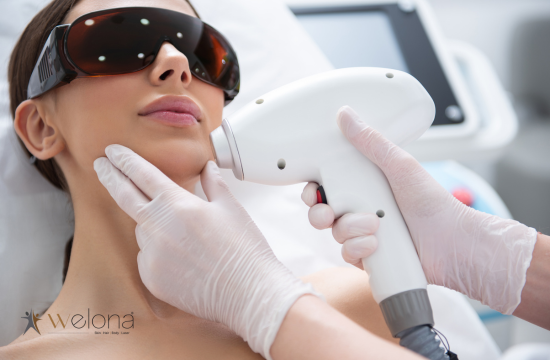
Laser hair reduction works on an entirely different principle. Instead of mechanically ripping hair from the follicle, it uses focused light energy that is absorbed by the melanin in the hair shaft and converted to heat. That heat travels down to the root and damages the follicle’s ability to produce new hair, without touching or traumatising the surrounding skin.
At Welona Clinic in Chennai, FDA-approved Nd:YAG and Diode laser platforms are used, which are specifically chosen for their safety profile on Indian skin. The Nd:YAG laser operates at a wavelength that bypasses surface melanin and targets the deeper follicle directly, significantly reducing the risk of PIH that cheaper or poorly calibrated machines can cause.
The long-term skin impact of laser hair reduction is markedly different from waxing:
- No repeated mechanical trauma to the skin surface
- No repeated follicle rupture, which means dramatically fewer ingrown hairs over time
- Progressive reduction in folliculitis and associated pigmentation
- Smoother skin texture as irritation cycles stop
- Existing post-waxing pigmentation often improves once waxing stops and laser treatment begins
For anyone already dealing with dark underarms, inner-thigh pigmentation, or chronic ingrown hairs from years of waxing, laser hair reduction in Chennai is often part of a broader skin correction plan rather than just a hair-removal method.
The Indian Skin Factor
This distinction matters more in Chennai and across India than it does in many other markets, and it’s worth stating directly.
Indian skin produces melanin more readily in response to inflammation. This is not a flaw. It is a protective biological response. But it means that any treatment involving repeated skin trauma carries a higher risk of leaving behind pigmentation. Waxing, by definition, involves repeated skin trauma every single session.
Dermatologists at Welona note that Indian skin types (Fitzpatrick IV and V) are rich in melanin, and using the wrong settings or the wrong laser can easily trigger post-inflammatory hyperpigmentation or permanent scarring. Clinical laser hair reduction using properly calibrated Nd:YAG or Diode lasers can offer 70 to 90% permanent reduction in hair growth, while salon-based IPL treatments often result in temporary, patchy regrowth with a higher risk of skin damage.
This is why the laser type, the machine quality, and the dermatologist’s calibration of settings for your specific skin tone are not cosmetic considerations. They are clinical ones.
Sessions and Timeline: What to Realistically Expect
Waxing delivers immediate results and requires no planning beyond booking your next appointment. That convenience is real. But the hair is always back within three to five weeks, and the skin impact accumulates silently with each cycle.
Laser hair reduction requires an upfront investment of time. Most patients need 6 to 8 sessions spaced 4 to 6 weeks apart to achieve a significant reduction, because hair grows in cycles and the laser only targets follicles in the active growth phase. After completing a full course, most patients see 70 to 90% reduction in hair density. Hair that does regrow is typically finer, lighter, and less frequent.
Occasional maintenance sessions, once or twice a year, are usually sufficient to sustain results long term, especially in areas influenced by hormonal fluctuations.
Cost: The Long-Term Comparison
Waxing appears cheaper per session. But over the years, the cumulative cost of monthly waxing appointments, pigmentation treatments to address the damage, and products to manage ingrown hairs and folliculitis adds up substantially.
Laser hair reduction in Chennai is a fixed investment over a defined treatment course, after which ongoing costs drop dramatically. For most patients, the break-even point arrives within one to two years, after which the financial and skin health advantages both run strongly in the laser’s favor.
Why Choose Welona for Laser Hair Reduction in Chennai
Patients seeking laser hair reduction in Anna Nagar, T. Nagar, or Adyar consistently find Welona among the most clinically rigorous options in the city. Here’s why the clinical difference matters.
FDA-approved laser technology with real-time skin cooling
Welona uses the GentleYAG Candela machine, one of the most trusted FDA-approved laser platforms worldwide. The system features advanced Sapphire contact cooling that chills the skin to sub-zero temperatures milliseconds before each laser pulse, protecting the surface while the laser does its work beneath. Patients consistently describe the sensation as far more comfortable than a standard wax session.
Dermatologist-led treatment from the first session
At Welona, laser parameters are not set by a technician following a template. Qualified MD dermatologists evaluate your skin type, hair colour, hormonal history, and any existing pigmentation before calibrating the machine to your specific profile. This is what prevents the PIH risk posed by poorly supervised laser treatments.
A laser that also addresses existing pigmentation
Welona’s Nd:YAG laser does more than reduce hair. It also treats pigmentation and vascular damage in the treated area. For patients coming off years of waxing with darkened underarms or inner thighs, this is a meaningful added benefit that most laser hair removal clinics in Chennai do not offer.
Honest treatment planning
Welona does not promise 100% permanent hair removal in three sessions. What patients receive is a realistic roadmap to a 70 to 90% permanent reduction, a full explanation of how many sessions their specific hair type and skin tone require, and a clear picture of what maintenance looks like after the initial course.
To Wrap It Up
Waxing works. But the long-term skin cost of monthly mechanical trauma, particularly for Indian skin tones prone to hyperpigmentation, is something most people only recognise after years of dealing with darkened skin, ingrown hairs, and chronic folliculitis. Laser hair reduction in Chennai addresses the root cause rather than repeating the cycle.
At Welona Clinic, our dermatologists evaluate your skin, hair type, and any existing damage before building a laser hair reduction plan that delivers real, lasting results without compromising your skin.
Book Your Laser Hair Reduction Consultation at Welona. Visit our expert dermatologists at our Anna Nagar, T. Nagar, or Adyar clinics and find out how many sessions your skin actually needs.
FAQ
Is laser hair reduction safe for Indian skin?
Yes, when performed with the right laser type and properly calibrated settings. Nd:YAG and Diode lasers are the safest options for Fitzpatrick skin types IV and V, as they bypass surface melanin and target the deeper follicle. At Welona Clinic in Chennai, all laser parameters are set by qualified dermatologists.
Does waxing cause permanent skin darkening?
Repeated waxing can cause post-inflammatory hyperpigmentation that becomes increasingly difficult to reverse over time, especially in areas like underarms, inner thighs, and the bikini line. Once waxing stops and laser treatment begins, the skin often gradually improves.
How many laser hair reduction sessions do I need in Chennai?
Most patients require 6 to 8 sessions spaced 4 to 6 weeks apart for significant hair reduction. The exact number depends on hair colour, thickness, the area being treated, and hormonal factors. Occasional maintenance sessions may be needed annually.
Is laser hair reduction painful?
Modern laser systems with integrated cooling technology make the procedure significantly more comfortable than waxing. Welona’s Candela Gentle Yag machine features Sapphire contact cooling that chills the skin before each pulse, making most patients describe the sensation as a mild warm snap.
Can laser hair reduction fix darkening caused by years of waxing?
In many cases, yes. Stopping the waxing cycle removes the repeated trauma that drives pigmentation. Welona’s Nd:YAG laser also targets pigmentation in the treated area alongside hair follicles, which can visibly improve existing post-waxing darkening over the course of treatment.