
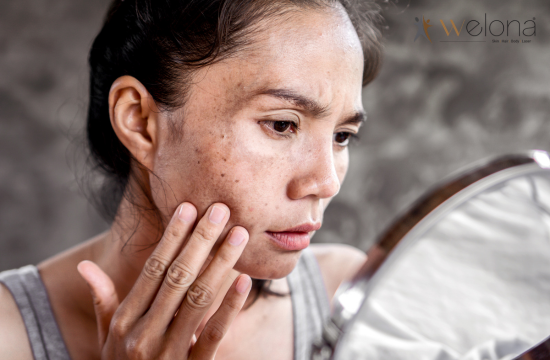
Your moisturiser suddenly stings. Your skin feels tight even though you keep applying products. A cleanser you have used for months now leaves your face red and uncomfortable.When this happens, you may hear someone say, “Your skin barrier is damaged.” But what does that actually mean, and how can you help your skin recover?
The skin barrier is your skin’s outer protective layer. When it functions well, it helps retain moisture and protects against external irritants. When it becomes disrupted, your skin may feel dry, sensitive, flaky, or unusually reactive. In many cases, a simpler skincare routine and the right moisturising products can help support recovery. However, persistent irritation may also indicate an underlying skin condition that needs professional assessment.
The Skin Barrier and Its Protective Role
The outermost layer of your skin is called the stratum corneum. Think of it as a protective wall.
Skin cells called corneocytes form part of this wall, while lipids such as ceramides, cholesterol, and fatty acids help fill the spaces between them. Together, they help prevent excessive water loss and limit the entry of external irritants.
The Study Conducted By ncbi explains the importance of the stratum corneum in maintaining water balance and protecting the skin from the external environment.
When this protective structure is disrupted, the skin may lose moisture more easily and become reactive to products that previously caused no discomfort.
Signs Your Skin Barrier May Be Compromised
There is no single symptom that confirms skin barrier damage. However, several changes occurring together may suggest that your skin is irritated or its protective function has been compromised.
Common signs include:
- Unusual dryness or dehydration
- Tight or uncomfortable skin
- Flaking or peeling
- Increased sensitivity
- Redness or itching
- Rough or uneven texture
- Burning or stinging
- Products suddenly feeling irritating
- Skin feeling dehydrated despite regular moisturising
One common clue is when a normally gentle product suddenly begins to sting.
However, these symptoms can also occur with eczema, contact dermatitis, rosacea, or allergic reactions. Persistent redness, itching, or burning should not automatically be labelled as a damaged skin barrier.
Common Causes of Skin Barrier Damage
Sometimes, the problem is simply that we are doing too much to our skin. A complicated skincare routine is not necessarily a better one.
Over-Exfoliation
Using exfoliating acids, scrubs, or peeling products too frequently can irritate the outer layer of the skin. Combining several exfoliating products may increase the risk of dryness and sensitivity.
Too Many Active Ingredients
Retinoids, AHAs, BHAs, benzoyl peroxide, and other active ingredients can be beneficial when used appropriately. However, using several strong products together may increase irritation, particularly when your skin is already sensitive.
Harsh Cleansers and Hot Water
Cleansers that excessively strip oils from the skin may worsen dryness and tightness. Repeated washing, aggressive scrubbing, and very hot water can also contribute to discomfort.
Weather and Environmental Exposure
Dry air, excessive sun exposure, pollution, and changes in temperature can affect the skin’s moisture balance and make already irritated skin feel worse.
Certain Skin Treatments
Some acne medications, retinoids, chemical procedures, and other dermatological treatments can temporarily cause dryness or irritation.
This does not necessarily mean the treatment is harmful. It may mean your skincare routine needs to support your skin more carefully during treatment.
A Gentle Routine to Support Skin Barrier Recovery
When your skin is irritated, introducing another serum, peel, or trending ingredient may make it harder to identify what is causing the problem.
The first step is often to simplify your routine and focus on reducing irritation, supporting hydration, and protecting the skin while it recovers.
Step 1: Switch to Gentle Cleansing
Choose a mild cleanser appropriate for your skin type. Avoid repeatedly cleansing your face simply because it feels oily, as excessive cleansing may make irritated skin feel even tighter.
Use lukewarm water rather than very hot water, and avoid aggressive scrubbing.
Step 2: Pause Potentially Irritating Actives
If your skin is burning, peeling, or unusually sensitive, it may be helpful to temporarily pause products that could be contributing to irritation, such as:
- Strong exfoliating acids
- Physical scrubs
- Retinoids
- At-home peels
- Multiple acne actives used together
If an active ingredient was prescribed by your dermatologist, speak to them before making significant changes to your treatment.
Step 3: Use a Suitable Moisturiser
Moisturisers can help increase skin hydration and reduce water loss. Ingredients commonly found in barrier-supporting moisturisers include ceramides, glycerin, hyaluronic acid, petrolatum, fatty acids, and cholesterol.
Different moisturisers work in different ways, so there is no single product that suits everyone. Choose a formulation appropriate for your skin type and current level of sensitivity.
Even oily or acne-prone skin can become dehydrated and irritated. Skipping moisturiser because your skin is oily may not be the right approach.
Step 4: Protect Your Skin From the Sun
UV exposure can add another source of stress to already irritated skin.
Use a broad-spectrum sunscreen appropriate for your skin and apply it consistently when exposed to daylight. If your current sunscreen stings, a dermatologist can help you identify a formulation better suited to sensitive skin.
Step 5: Give Your Skin Time
Skin barrier recovery is not an overnight process. How quickly your skin improves depends on what caused the irritation, how severe it is, and whether an underlying skin condition is present.
Avoid constantly changing products while waiting for improvement. A consistent, simple routine often makes it easier to understand how your skin is responding.
Skincare Habits to Avoid During Recovery
This is usually not the time to experiment with multiple new products or intensive treatments.
Try to avoid:
- Frequent facial scrubs
- Strong at-home chemical peels
- Picking or scratching irritated skin
- Very hot water
- Using several exfoliating acids together
- Introducing multiple new products at once
- Fragranced products if they trigger irritation
- Skipping moisturiser because your skin is acne-prone
The goal is not to stop every skincare product permanently. It is to reduce unnecessary irritation and reintroduce suitable products gradually when your skin is ready.
When Professional Skin Assessment Is Important
Not every case of redness or dryness is simply a damaged skin barrier. Some symptoms may indicate an underlying condition that requires appropriate diagnosis and treatment.
Consider seeing a dermatologist if you experience:
- Persistent or worsening redness
- Significant itching
- Pain or intense burning
- Cracked or bleeding skin
- Swelling
- Oozing or crusting
- A spreading rash
- Repeated reactions to skincare products
- Symptoms that do not improve after simplifying your routine
A dermatologist can help identify the cause of your symptoms and recommend a suitable treatment plan rather than relying on trial and error.
Personalised Skin Barrier Care at Welona Chennai
At Welona, skin treatment begins by understanding why your skin is irritated rather than simply adding more products or procedures.
Dryness, sensitivity, acne treatments, pigmentation routines, and overuse of active ingredients can sometimes produce similar symptoms. A personalised assessment can help identify whether your skin needs barrier-supportive care or whether another condition is contributing to the problem.
Once your skin has been assessed, your dermatologist can also advise when it is appropriate to restart active skincare or consider professional treatments.
You can explore Welona’s skin treatments to learn more about the available skin care and treatment options.
Final Thoughts
A compromised skin barrier often shows up as skin that suddenly feels dry, tight, sensitive, flaky, or unusually reactive.
Recovery does not usually begin with adding another powerful ingredient. It begins with reducing irritation, supporting hydration, protecting the skin, and allowing it time to recover.
Most importantly, do not assume that persistent burning, redness, or itching is simply something you need to push through. Your skin may be telling you that it needs a different approach.
If your skin is constantly dry, irritated, or reacting to products that once worked well, book an appointment with Welona for a personalised skin assessment and care plan.
Frequently Asked Questions
1. How do I know if my skin barrier is damaged?
Common signs include dryness, tightness, flaking, redness, sensitivity, itching, and products suddenly causing burning or stinging. These symptoms can also occur with other skin conditions, so persistent problems should be evaluated by a dermatologist.
2. How long does a damaged skin barrier take to repair?
There is no fixed recovery time. Mild irritation may improve relatively quickly once the trigger is removed, while more significant barrier disruption can take longer. Recovery also depends on whether an underlying skin condition is present.
3. Should I stop retinol if my skin barrier is damaged?
If retinol is causing significant burning, peeling, or irritation, reducing or temporarily pausing it may be appropriate while the skin recovers. If you are using a prescription retinoid, discuss changes with your dermatologist.
4. Can acne-prone skin have a damaged skin barrier?
Yes. Acne-prone skin can still become dry, dehydrated, and irritated, particularly when using treatments such as retinoids, benzoyl peroxide, or exfoliating acids. A suitable non-comedogenic moisturiser can help support the skin while continuing an appropriate acne treatment plan.