

Walk into a modern skin clinic and the number of treatment options can feel overwhelming. Lasers, radiofrequency, microneedling, chemical peels, injectables, and other technologies are all used to address different skin concerns.But the most advanced machine is not necessarily the right treatment for your skin.
Dermatologists select treatments by considering the diagnosis, skin type, depth of the concern, treatment target, medical history, and possible side effects. That is why two people with pigmentation or acne scars may receive completely different treatment plans. Understanding this process can help you make more informed decisions about your skin care.
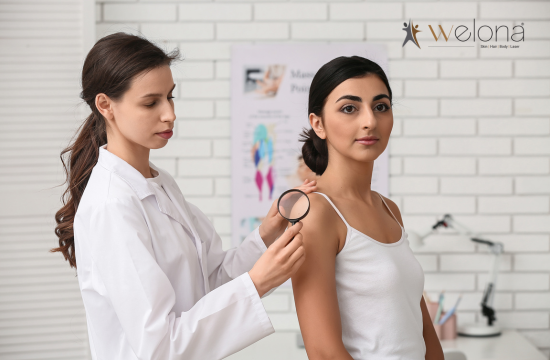
The Assessment Behind a Personalised Treatment Plan
Choosing the right skin treatment begins with identifying what is causing the concern and where the target lies within the skin.
A dermatologist may assess:
- The type and severity of the skin concern
- Skin tone and Fitzpatrick skin type
- Depth of pigmentation or scarring
- Active acne or inflammation
- Previous treatments and their results
- Tendency to develop pigmentation or scars
- Medical history and relevant medications
- Expected downtime and treatment goals
Once the concern is understood, the dermatologist can consider which treatment is capable of reaching the target while minimising unnecessary damage to surrounding tissue.
This is important because visible skin concerns do not always have the same underlying cause.
Different Skin Concerns Need Different Approaches
Pigmentation, acne, scars, wrinkles, and skin laxity involve different structures and processes within the skin.
For example, pigmentation involves melanin at different depths, while acne may involve inflammation, sebum, and clogged follicles. Acne scars involve structural changes in the skin, and wrinkles may result from muscle movement, collagen loss, or changes in facial volume.
A technology designed to target pigment is therefore not automatically suitable for acne scars or skin laxity.
A Study conducted by ncbi that discusses how technologies such as ablative and non-ablative lasers, radiofrequency, and microfocused ultrasound may be selected for different concerns and skin types.
The biological target matters more than the name or popularity of a particular machine.
Skin Type and Safety Considerations
Skin tone is especially important when selecting certain energy-based treatments.
Melanin absorbs some wavelengths of light. In darker skin tones, greater epidermal melanin can compete for that energy, which may increase the risk of complications if inappropriate technology or aggressive settings are used.
Potential risks include:
- Burns
- Post-inflammatory hyperpigmentation
- Hypopigmentation
- Prolonged irritation
- Scarring
This is particularly relevant for Indian skin, where pigmentation-related complications require careful consideration.
Many laser and energy-based treatments can be performed successfully across darker skin phototypes, but device selection, treatment parameters, and technique need to be adjusted appropriately.
The same settings should not simply be used for every patient.
Selecting Treatments for Pigmentation
Pigmentation is not a single diagnosis. Dark patches or spots may result from melasma, sun damage, post-inflammatory hyperpigmentation, freckles, lentigines, acne marks, or other pigmentary disorders.
The cause and depth of the pigment influence treatment selection.
Certain laser technologies use wavelengths designed to interact with melanin. Other pigmentation concerns may respond better to topical treatment, chemical peels, or a combination approach.
For selected concerns, Q-switched and other pigment-targeting lasers may be considered. Superficial chemical peels may be more appropriate in other situations.
Melasma requires particular caution because excessive heat or inflammation can sometimes worsen pigmentation. A proper diagnosis should therefore come before choosing a device or procedure.
Personalised Treatment for Acne Scars
Acne scars are a clear example of why one treatment does not suit everyone.
Common types of atrophic acne scars include ice-pick, boxcar, rolling, and mixed scars. Each type has a different structure and may respond differently to treatment.
Fractional CO₂ laser may be considered when significant resurfacing and collagen remodelling are required.
MNRF, or microneedling radiofrequency, delivers radiofrequency energy through microneedles into the dermis and may be considered for collagen remodelling and acne scar improvement.
However, some scars may require other procedures or a combination of techniques. International consensus recommendations recognise several energy-based options for acne scars, including fractional lasers, vascular lasers, and radiofrequency devices.
The aim is to match the treatment to the scar pattern rather than assume that one machine can address every type of acne scar.
Treating Fine Lines, Wrinkles, and Skin Ageing
Skin ageing involves several changes that may occur together, including fine lines, dynamic wrinkles, collagen loss, facial volume loss, skin laxity, uneven texture, and pigmentation.
These concerns do not all respond to the same treatment.
Dynamic wrinkles caused by repeated muscle movement may require a different approach from wrinkles related primarily to collagen loss. Similarly, facial volume loss is not the same as surface texture or skin laxity.
A dermatologist therefore needs to identify the changes contributing to your concern before recommending an anti-ageing treatment.
Laser and Radiofrequency Technologies
Lasers and radiofrequency devices deliver energy in different ways.
Laser treatments use specific wavelengths of light. Depending on the technology, they can target structures such as pigment, water, or blood vessels.
Radiofrequency treatments use electrical energy to generate controlled heat within tissue. MNRF combines radiofrequency with microneedles, allowing energy to be delivered at selected depths beneath the skin.
Neither technology is universally better.
The choice depends on the treatment target, required depth, skin type, desired degree of resurfacing, downtime, pigmentation risk, and previous treatment response.
Treatment depth is particularly important. A superficial concern may need a different approach from a deeper acne scar. If treatment does not adequately reach the target, results may be limited. If it is unnecessarily aggressive, the risk of complications may increase.
The goal is appropriate treatment rather than simply delivering more energy.
The Role of Combination Treatments
A person may have several skin concerns at the same time. For example, acne scars may occur alongside active acne, post-acne pigmentation, uneven texture, and enlarged-looking pores.
Trying to address all of these concerns with one machine may not produce the most suitable treatment strategy.
Research on acne scars supports a multimodal approach because different scar morphologies respond differently to different technologies and techniques.
A personalised plan may therefore involve different procedures at different stages. The sequence, suitability, and recovery time should be determined through professional assessment.
Why the Newest Technology Is Not Always the Best
Newer technologies can offer important advances, but the age of a machine does not determine whether it is right for your skin.
A well-established treatment selected correctly may be more appropriate than the latest device used simply because it is new.
What matters is whether the technology can address your specific concern with an acceptable safety profile for your skin type.
The expertise behind treatment selection is just as important as the technology itself.
Personalised Skin Treatment Planning at Welona Chennai
At Welona, skin treatment planning begins with understanding the concern rather than immediately choosing a machine.
Factors such as skin type, pigmentation tendency, acne or scar pattern, ageing concerns, and treatment goals can help determine which approach may be suitable.
Depending on your assessment, a personalised treatment strategy may include:
- Laser-based treatments
- MNRF
- Fractional CO₂ laser
- Chemical peels
- Skin rejuvenation procedures
- Injectables
- Combination treatment plans
You can explore Welona’s skin treatments to learn more about the available technologies and treatment options.
Final Thoughts
The best skin treatment is not necessarily the newest, strongest, or most expensive option. It is the treatment that appropriately matches your diagnosis, skin type, treatment target, and individual goals.
Pigmentation, acne scars, wrinkles, texture, and skin laxity all behave differently. Even two people with the same visible concern may need different approaches.
That is why professional assessment should come before technology selection.
Not sure which treatment is right for your skin concern? Book an appointment with Welona for a personalised skin assessment and treatment plan.
Frequently Asked Questions
1. How does a dermatologist decide which laser is best for your skin?
The choice depends on the diagnosis, target within the skin, skin tone, treatment depth, severity of the concern, and risk of side effects. Different laser wavelengths interact with different targets, so one laser is not appropriate for every skin problem.
2. Which technology is best for acne scars?
There is no single best technology for every acne scar. Fractional lasers, MNRF, and other procedures may be considered depending on whether the scars are ice-pick, boxcar, rolling, or mixed. Combination treatment may be recommended when several scar types are present.
3. Are laser treatments safe for Indian skin?
Many laser and energy-based treatments can be used on Indian skin when the technology and parameters are selected appropriately. Because darker skin tones can be more prone to post-inflammatory pigmentation, wavelength, energy, density, and treatment technique need careful consideration.
4. Can one skin treatment solve multiple concerns?
Some technologies can improve more than one concern, but one treatment does not necessarily address every skin problem. When pigmentation, acne scars, texture, and ageing changes occur together, a personalised combination treatment plan may be more appropriate.