
Walk into any salon in Chennai, and you’ll find a menu full of facials, each promising glowing, refreshed skin. Walk into a dermatology clinic, and the conversation starts very differently. The products change, the process changes, and most importantly, the outcomes change.
If you’ve been getting regular salon facials but your skin concerns, whether it’s pigmentation, recurring breakouts, dullness, or uneven texture, just aren’t shifting, there’s a clinical reason for that. Understanding the difference between a salon facial and a medical facial isn’t just a matter of preference. For anyone dealing with a real skin concern, it’s the difference between maintenance and actual treatment.
Quick Answer: Salon Facial vs Medical Facial
Salon facials are primarily designed for relaxation and surface-level skin refreshment, using cosmetic-grade products. They cleanse, exfoliate lightly, and hydrate, delivering a temporary glow that typically fades within days. Medical facials, also called medi facials, are dermatologist-designed treatments using pharmaceutical-grade active ingredients at therapeutic concentrations. They target specific skin concerns at a cellular level, including acne, pigmentation, uneven texture, and early ageing, with results that are clinically measurable and longer lasting. Salon facials suit skin maintenance. Medical facials suit skin correction. For any active concern, dermatologists recommend medi facials over salon facials.
What Happens in a Salon Facial?
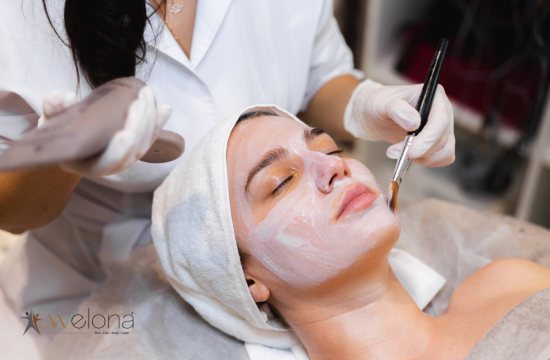
A standard salon facial follows a broadly similar structure across most establishments: cleansing, steam, manual extraction, exfoliation, a mask, and a finishing moisturiser. The person performing it is typically a beautician trained in facial techniques, not a dermatologist or clinical skin therapist.
The products used are cosmetic-grade, meaning they are formulated to stay on the surface of the skin and work best within the epidermis. Regulatory requirements for cosmetic products intentionally limit how deeply active ingredients can penetrate, which is precisely why cosmetic-grade skincare has an inherent ceiling on what it can achieve.
Salon facials are not without value. For someone with generally healthy skin looking for a relaxation experience or a short-term glow boost before an event, a salon facial delivers exactly what it’s designed to do. The issue arises when people expect a salon facial to address a medical skin concern. That expectation almost always leads to disappointment.
What Happens in a Medical Facial?
A medi facial starts before the treatment even begins. At a dermatology clinic, the process begins with a skin assessment, during which the type, severity, and underlying cause of the concern are evaluated before any product touches your face. The protocol is then built around your specific skin condition, not a fixed menu.
Medical-grade products used in medi facials are formulated to penetrate below the epidermis and work at the dermal level, where structural skin changes like collagen remodelling, melanin regulation, and cellular repair actually occur. These products require a prescription or clinical administration precisely because they are potent enough to produce real change.
Depending on your concern, a medi facial at a dermatology clinic may include:
- Medical-grade chemical exfoliation using AHAs, BHAs, or TCA at therapeutic concentrations
- Enzyme peels for sensitive or reactive skin types
- Active brightening or anti-pigmentation serums infused post-exfoliation
- Microneedling-assisted product delivery for deeper penetration
- LED light therapy to reduce inflammation and stimulate collagen
- Barrier-restoring actives to protect and stabilise the skin post-treatment
The person administering the treatment is trained in clinical skin therapy and works directly under a dermatologist’s supervision. That distinction matters enormously for safety, especially for Indian skin types that are more prone to post-inflammatory hyperpigmentation when treated aggressively or incorrectly.
What the Research Says About Medical-Grade Facial Ingredients
The clinical evidence base for the active ingredients used in medi facials is well established.
A peer-reviewed review published on PMC examining glycolic acid peel therapy found that, in comparative studies, glycolic acid peels were associated with fewer side effects than TCA peels while delivering equivalent improvement in melasma, with the added benefit of overall facial rejuvenation in a single session.
A prospective, randomised, double-blind, placebo-controlled split-face clinical trial published on PubMed found that 40% glycolic acid peels significantly improved moderate acne in Asian patients over five sessions, confirming both safety and efficacy in darker skin types.
These are the same classes of ingredients used in properly designed medi facials. The key difference between a clinical outcome and a cosmetic one is the concentration of actives, the depth of penetration, the personalisation of the protocol, and the supervision under which the treatment is performed. None of these conditions exists in a standard salon setting.
Results: How Do They Actually Compare?
The comparison between salon and medical facials isn’t close when it comes to measurable skin improvement.
After a salon facial, most patients notice softer skin texture and a temporary glow that typically lasts 3 to 5 days before the skin returns to its baseline. No structural change has occurred. No pigmentation has been targeted and no collagen has been stimulated.
After a series of medi facials, patients with acne-prone skin notice fewer breakouts and less congestion. Those with pigmentation concerns see progressive lightening of dark spots and more even tone. Those dealing with dullness or early ageing notice improved texture, tighter pores, and longer-lasting luminosity. These outcomes are cumulative, building with each session, and they are backed by the same clinical mechanisms that make chemical peels and targeted actives effective in more intensive treatments.
When Is a Salon Facial the Right Choice?
Salon facials aren’t without a place in a skincare routine. They are appropriate when:
- Your skin is generally healthy, and you want a relaxation experience
- You’re maintaining results between medi facial sessions
- You want a temporary refresh before an event
- You have no active skin concerns requiring clinical intervention
The important distinction is intention. A salon facial is a wellness experience. A medical facial is a skin treatment. Confusing the two often leads to months of spending on something that isn’t designed to fix what you’re trying to fix.
Why Dermatologists at Welona Recommend Medical Facials
At Welona, facials are approached as clinical treatments, not cosmetic add-ons. Here’s what sets the medi facial experience apart.
Skin assessment before every session.
No protocol is applied without first understanding your skin. Welona’s dermatologists evaluate skin type, concern severity, sensitivity level, and any active conditions before selecting the right medi facial approach. A patient with melasma and a patient with acne-prone skin will not receive the same treatment, even if they book the same appointment.
World-class protocols, including ZO Obagi.
Welona offers internationally recognised medical facial systems like the ZO Obagi Facial, a dermatologist-designed treatment protocol backed by decades of clinical research. It addresses pigmentation, post-acne marks, uneven texture, and early aging while being safe for all skin types, including Indian skin tones.
Medical-grade ingredients, properly applied.
The active concentrations used in Welona’s medi facials are clinical strength. These are not the same products available in a salon or over the counter. They are prescribed and applied under dermatologist supervision because that’s what responsible clinical skincare requires.
Part of a broader treatment plan
For patients dealing with persistent concerns, medi facials at Welona are rarely standalone treatments. They are integrated into a broader skin management plan that may include laser toning, chemical peels, pigmentation treatments, or other targeted modalities, depending on what the skin needs. A facial session contributes to the overall goal rather than existing in isolation.
To Wrap It Up
Salon facials and medi facials serve fundamentally different purposes. One is a relaxation ritual. The other is a clinical treatment. If your skin is struggling with a real concern that hasn’t responded to regular salon visits or over-the-counter products, the answer isn’t a better salon facial. It’s the right medical one, designed for your skin, by someone who understands what’s actually going on beneath the surface.
At Welona Clinic, a medi facial isn’t a menu item. It’s a dermatologist-led protocol built around your skin’s specific needs.
Book Your Skin Assessment at Welona Consult with our expert dermatologists in Anna Nagar, T. Nagar, or Adyar and find out which medi facial protocol is right for your skin.
FAQ
What is the difference between a salon facial and a medical facial?
Salon facials use cosmetic-grade products for surface-level cleansing and temporary brightness. Medical facials use pharmaceutical-grade active ingredients applied under dermatologist supervision to address specific skin concerns at a cellular level, delivering clinically measurable and longer-lasting results.
How often should I get a medi facial?
Most dermatologists recommend medi facials every 3 to 4 weeks for active concerns, transitioning to once every 4 to 6 weeks for maintenance once the skin has improved. The frequency depends on your skin type and treatment goals.
Are medical facials safe for Indian skin?
Yes, when designed and administered by a qualified dermatologist. Properly chosen medi facial protocols, including enzyme-based or low-concentration AHA peels, are well-tolerated by Indian skin types. The risk of post-inflammatory hyperpigmentation is minimised when the right protocol is selected.
Can I get a salon facial and a medi facial in the same month?
It depends on the medi facial type. After more intensive treatments like medium-depth chemical peels, the skin needs recovery time. For gentler medi facial protocols, a relaxation-focused salon facial may be fine in between. Always check with your dermatologist first.
Do medi facials hurt?
Most medi facials involve mild tingling or warmth during application of active ingredients, particularly peels. Discomfort is generally minimal and short-lived. Your skin therapist will monitor your response throughout the session.