

Acne may eventually settle, but the scars it leaves behind can remain for years. If you have rolling scars, boxcar scars, or uneven skin texture after acne, you may have come across fractional CO₂ laser treatment while looking for ways to improve them.
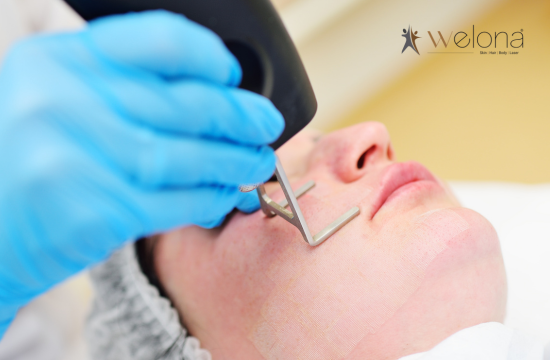
Fractional CO₂ laser is a skin-resurfacing treatment that creates microscopic zones of controlled injury in the skin. This activates the natural repair process and encourages collagen remodelling. Over time, it may help soften depressed acne scars and make the skin surface appear smoother and more even.However, acne scars are not all the same. The suitability of laser treatment depends on your scar type, skin tone, and individual treatment goals.
Understanding Acne Scars and Their Formation
Not every pimple leaves a scar. Acne scars are more likely to develop when inflammation extends deeper into the skin and disrupts normal collagen.
During healing, the skin may produce too little or too much collagen. When there is a loss of tissue and collagen, atrophic or depressed acne scars can develop.
The three common types are:
- Ice-pick scars: Narrow, deep scars that extend into the skin.
- Boxcar scars: Wider depressions with relatively defined edges.
- Rolling scars: Broader, shallow depressions that can give the skin a wavy or uneven appearance.
Some people have a combination of these scar types. Understanding the scar pattern matters because different scars may respond better to different treatments or combinations of procedures.
The Science Behind Fractional CO₂ Laser
Fractional CO₂ laser uses a wavelength of 10,600 nm, which is strongly absorbed by water in the skin.
The term “fractional” refers to the way the laser delivers energy. Instead of treating the entire skin surface continuously, it creates microscopic columns of controlled ablation and thermal injury while leaving surrounding areas relatively intact.
These untreated areas help support healing and tissue regeneration.
The treatment works through a controlled repair process:
- Laser energy creates microscopic treatment zones in the skin.
- Targeted tissue is ablated, and controlled heat reaches the surrounding tissue.
- The skin begins its natural wound-healing response.
- Fibroblasts become involved in tissue repair.
- New collagen formation and remodelling of existing collagen occur.
- The treated skin gradually becomes smoother as healing progresses.
A Study conducted by ncbi that discusses its role in scar improvement and highlights the importance of appropriate treatment parameters, particularly for darker skin types.
Collagen Remodelling and Scar Improvement
Collagen is an important part of the skin’s structural support. Atrophic acne scars involve changes and loss of collagen within the dermis, which is why surface exfoliation alone may not significantly improve deeper scars.
Fractional CO₂ laser treatment creates controlled thermal injury that stimulates the skin’s repair response. Fibroblasts, the cells involved in producing collagen and other components of the extracellular matrix, participate in rebuilding the treated tissue.
Over the following weeks and months, new collagen forms and existing collagen reorganises. This gradual remodelling may help improve the depth and edges of depressed scars while making overall skin texture appear smoother.
The fractional approach was developed to achieve skin remodelling while reducing some of the recovery time and complications associated with traditional fully ablative resurfacing. However, it is still an ablative procedure and requires appropriate recovery and aftercare.
Acne Scar Types That May Benefit
Fractional CO₂ laser is commonly considered for atrophic acne scars, but the degree of improvement depends on scar type, depth, and individual skin response.
It may be used for:
- Boxcar scars
- Rolling scars
- Selected ice-pick scars
- Uneven post-acne skin texture
- Mixed atrophic acne scarring
One treatment is not necessarily suitable for every scar. Deep ice-pick scars, tethered rolling scars, and mixed scar patterns may require other procedures or combination treatments.
A professional assessment can help determine whether fractional CO₂ laser is appropriate or whether another approach may offer a better balance of benefits and risks.
You can learn more about Welona’s acne, pimples, and acne scar treatment options before deciding which treatment may suit your skin.
Expected Results and Treatment Sessions
Fractional CO₂ laser does not remove acne scars immediately. The treatment begins a repair process, and the skin needs time to heal and remodel.
Initial changes may become noticeable after the skin has recovered, while collagen remodelling continues over the following weeks and months.
Depending on the scar pattern and individual response, improvements may include:
- Smoother-looking skin texture
- Softer scar edges
- Reduced appearance of depressed scars
- Improvement in overall skin quality
- More even-looking skin
The number of sessions varies. Some people may require multiple treatments, while others may need a combination of procedures to address different scar types.
Treatment planning depends on scar depth, severity, skin tone, previous treatments, laser settings, and how the skin responds and heals. The goal is progressive improvement while balancing results with safety.
Complete scar removal should not be promised, and the degree of improvement varies from person to person.
Safety Considerations for Indian Skin
Fractional CO₂ laser can be used for darker skin types, but careful patient selection and treatment parameters are particularly important.
Indian skin may have a greater tendency to develop post-inflammatory hyperpigmentation after procedures that create inflammation. This means factors such as fluence, density, pulse duration, skin preparation, and aftercare need to be considered carefully.
Temporary effects after treatment may include redness, swelling, sensitivity, crusting, peeling, and temporary darkening. Post-inflammatory hyperpigmentation can also occur.
Less common complications may include prolonged redness, infection, pigmentary changes, or scarring. These risks make professional assessment, appropriate laser settings, and careful aftercare essential.
Recovery and Post-Treatment Care
Fractional CO₂ laser is an ablative treatment, so some downtime should be expected. The extent of recovery depends on the treatment intensity, area treated, and individual skin response.
Your skin may initially look red and feel warm or sensitive. Swelling, crusting, or peeling can occur as the microscopic treatment zones heal.
Your practitioner may recommend:
- Keeping the skin clean and appropriately moisturised
- Avoiding picking, scratching, or forcibly removing crusts
- Using suitable sun protection as advised
- Avoiding unnecessary heat and direct sun exposure
- Following the prescribed skincare and aftercare routine
- Attending follow-up appointments when recommended
Sun protection is especially important because freshly treated skin can be more vulnerable to pigmentation.
Contact your treating dermatologist if you experience worsening pain, increasing redness, significant swelling, unusual discharge, or other concerning symptoms after treatment.
Fractional CO₂ Laser for Acne Scars at Welona Chennai
Acne scar treatment should begin by identifying the type and severity of the scars rather than selecting a procedure based only on the appearance of the skin.
At Welona, your skin and acne scars can be assessed before an appropriate treatment plan is recommended.
Fractional CO₂ laser may be considered when the goal is to improve selected atrophic acne scars through controlled resurfacing and collagen remodelling. Depending on your scar pattern, other procedures or combination treatments may also be recommended.
You can explore Welona’s skin treatments to understand the different options available for acne scars and other skin concerns.
Final Thoughts
Fractional CO₂ laser can improve selected acne scars by creating microscopic treatment zones that activate the skin’s repair response and encourage collagen remodelling.
As the skin heals, depressed scars may gradually appear shallower and the overall surface may become smoother. However, results depend on the scar type, treatment parameters, skin tone, and individual healing response.
The right treatment plan should be based on a professional scar assessment rather than assuming that one laser can address every type of acne scar.
Book an appointment with Welona for a personalised skin and acne scar assessment.
Frequently Asked Questions
1. Does fractional CO₂ laser permanently remove acne scars?
Fractional CO₂ laser can significantly improve the appearance and texture of selected acne scars, but complete or permanent removal should not be promised. The goal is scar improvement through resurfacing and collagen remodelling. Results vary according to scar type, depth, and individual skin response.
2. How many fractional CO₂ laser sessions are needed for acne scars?
There is no universal number. Some people may require multiple sessions depending on the severity and type of scarring, skin tone, treatment settings, and healing response. A dermatologist should assess the scars before recommending a treatment plan.
3. How long does it take to see results from fractional CO₂ laser?
Initial changes may become noticeable after the skin heals, but collagen formation and remodelling continue over the following weeks and months. Acne scar improvement therefore develops progressively rather than appearing immediately after treatment.
4. Is fractional CO₂ laser safe for Indian skin?
Fractional CO₂ laser can be used in Indian skin when appropriate treatment parameters and aftercare are selected. However, darker skin types may have a greater risk of post-inflammatory hyperpigmentation, so careful assessment, suitable laser settings, and diligent sun protection are important.