

You cleanse, exfoliate, and follow your skincare routine, yet your skin can still look dull, uneven, or rough. Dead skin cells, pigmentation, acne, and sun damage can all affect how smooth and bright your skin appears. Chemical peels are professional skin-resurfacing treatments that may help address some of these concerns.
They use carefully selected chemical solutions to create controlled exfoliation and encourage the skin’s natural renewal process.Depending on the peel and your skin concern, treatment may gradually improve texture, uneven pigmentation, acne, and signs of sun damage. The key is choosing the right peel for your skin rather than assuming that a stronger treatment will produce better results.
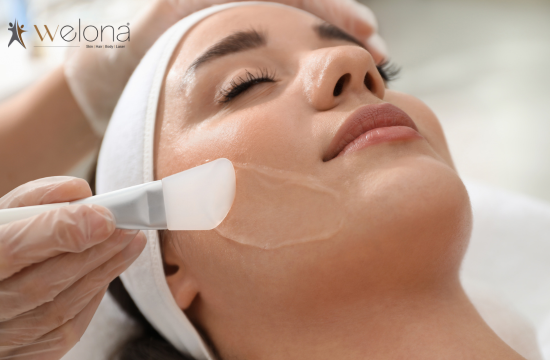
Understanding Chemical Peels and Skin Renewal
A chemical peel is a professional procedure in which a chemical solution is applied to the skin to create a controlled effect at a selected depth.
The process is called chemexfoliation. The solution causes targeted layers of skin cells to exfoliate, after which the skin begins its natural repair and regeneration response.
Depending on the type and depth of the peel, treatment may help:
- Remove accumulated dead skin cells
- Encourage epidermal renewal
- Improve uneven-looking pigmentation
- Reduce clogged pores and selected types of acne
- Smooth rough skin texture
- Improve certain signs of sun damage
- Stimulate deeper skin remodelling with some medium or deep peels
A Study conducted by ncbi that explains that superficial peels primarily affect the epidermis, while medium and deeper peels reach further into the skin and can produce more extensive regeneration.
The goal is not simply to make the skin visibly peel. It is to create an appropriate, controlled treatment effect for the concern being addressed.
Different Peels for Different Skin Concerns
Chemical peels are not all the same. The peeling agent, concentration, formulation, and treatment depth influence how the solution interacts with the skin.
Common professional peeling agents include glycolic acid, salicylic acid, lactic acid, and trichloroacetic acid (TCA).
Each has different properties. For example, salicylic acid is oil-soluble and may be useful in selected acne treatment plans, while other formulations may be chosen for concerns such as uneven pigmentation, dullness, or photoaged skin.
A dermatologist considers your skin type, diagnosis, medical history, current skincare products, and treatment goals before recommending a peel.
You can learn more about chemical peel treatments at Welona and the professional peel options available.
The Role of Peel Depth
Chemical peels are broadly classified according to how deeply they affect the skin.
Superficial peels primarily work within the epidermis and generally involve less downtime. They may be used to address concerns such as dullness, mild uneven texture, and selected pigmentation or acne concerns.
Medium-depth peels extend through the epidermis into the upper dermis and produce more significant resurfacing. They may also stimulate dermal remodelling.
Deep peels reach further into the dermis and involve substantially greater skin injury, recovery time, and potential risks.
Increasing peel depth can produce greater structural changes, but it also increases healing time and the possibility of complications. A deeper peel is therefore not automatically the better choice.
The appropriate depth depends on what your skin needs and what can be treated safely.
Chemical Peels for Dullness, Pigmentation, and Acne
Chemical peels can address several concerns, but the treatment approach should be based on the underlying diagnosis.
Dullness and Uneven Texture
Accumulated surface cells and irregular skin texture can make the complexion appear rough or less radiant.
Superficial chemical peels encourage controlled exfoliation and epidermal renewal. As the treated skin recovers, its surface may appear smoother and reflect light more evenly, contributing to a brighter-looking complexion.
Brightening does not mean changing your natural skin colour. The objective is to address concerns such as dullness, uneven pigmentation, and surface damage, not to bleach healthy skin.
Pigmentation and Uneven Skin Tone
Certain chemical peels may be considered as part of treatment plans for post-inflammatory hyperpigmentation, melasma, sun-related pigmentation, and other forms of uneven skin tone.
They may help by promoting the removal and replacement of pigment-containing epidermal cells.
However, pigmentation is complex. Melasma, post-acne marks, and sun spots do not necessarily have the same cause or respond to the same treatment. Some pigmentation conditions can worsen with excessive irritation or inflammation.
Diagnosis, skin preparation, and appropriate peel selection are therefore important before treatment.
Acne and Clogged Pores
Selected chemical peels can also support acne treatment. Salicylic acid, for example, can penetrate oily follicles and may be useful for certain acne-prone skin types.
Depending on the formulation, chemical exfoliation may help improve clogged pores, comedonal acne, excessive surface oil, post-acne pigmentation, and uneven texture.
Chemical peels are generally part of a broader acne treatment strategy rather than a cure for every type of acne.
Collagen Remodelling and Skin Resurfacing
The effects of chemical peels extend beyond surface exfoliation in some treatments.
Superficial peels mainly create changes within the epidermis. Medium and deeper peels can produce changes in the dermis, including collagen remodelling.
This is why chemical peeling can range from relatively gentle surface exfoliation to more intensive skin resurfacing.
However, deeper treatment also involves greater recovery requirements and potential risks. The decision should be based on the concern being treated, skin type, and whether the expected benefits justify the procedure.
Treatment Frequency and Recovery
There is no single chemical peel schedule that works for everyone.
The frequency of treatment depends on:
- Your skin type and the concern being treated
- The peeling agent and formulation
- Concentration and treatment depth
- Your skin’s response and recovery
- Other skincare products or treatments you are using
Superficial peels may be performed as a series of treatments, while deeper peels require considerably more recovery time.
Your dermatologist should assess your skin before recommending repeat treatment. Performing peels too frequently or before the skin has recovered can increase irritation and the risk of complications.
Safety Considerations for Indian Skin
Chemical peels can be used on Indian skin, but careful selection is particularly important.
Darker skin tones may be more prone to post-inflammatory hyperpigmentation, where inflammation causes the skin to become darker after treatment. This does not mean chemical peels are unsuitable, but the peeling agent, concentration, depth, skin preparation, and aftercare need to be chosen carefully.
After treatment, your skin may temporarily experience redness, tightness, dryness, sensitivity, or peeling. The extent of these effects depends on the type and depth of the peel.
Follow your dermatologist’s aftercare instructions, avoid picking or forcibly removing peeling skin, and protect your skin from the sun. Newly treated skin can be more sensitive to UV exposure.
Chemical peels also carry risks, including prolonged redness, pigmentary changes, infection, and scarring, particularly with deeper treatments or inappropriate use. Severe pain, significant swelling, blistering, or signs of infection should be assessed promptly by a medical professional.
Professional assessment is especially important if you have active skin inflammation, a history of unusual scarring, or are using medications or skincare products that may affect treatment suitability.
Personalised Chemical Peel Treatment at Welona Chennai
A chemical peel should be selected according to what your skin actually needs, rather than simply choosing the strongest acid available.
At Welona, your skin type and concerns are assessed before an appropriate treatment plan is recommended.
Welona offers professional chemical peel treatments, including different formulations that may be selected for concerns such as dullness, uneven skin tone, pigmentation, acne, and skin texture.
Depending on your skin, chemical peels may also be combined with other professional treatments as part of a personalised skin plan.
You can explore Welona’s skin treatments to understand the different options available for your concerns.
Final Thoughts
Chemical peels renew the skin through controlled exfoliation and regeneration at a selected depth. Depending on the treatment, they may help improve dullness, uneven pigmentation, acne, rough texture, and certain signs of sun damage.
The best peel is not necessarily the strongest one. It is the one selected according to your skin type, diagnosis, treatment goals, and safety considerations.
A professional assessment can help you understand which approach may be suitable and what results and recovery you can realistically expect.
Book an appointment with Welona for a personalised skin assessment and treatment plan.
Frequently Asked Questions
1. What does a chemical peel actually do to your skin?
A chemical peel applies a controlled chemical solution to the skin to exfoliate targeted layers and encourage regeneration. Depending on its depth, it may help improve dullness, uneven pigmentation, acne, rough texture, and certain signs of sun damage.
2. How long does it take to see results after a chemical peel?
The timeline depends on the type and depth of the peel. Superficial peels may improve the skin’s appearance as it recovers and renews, while deeper treatments involve longer healing and remodelling. Multiple sessions may be recommended for some concerns.
3. Are chemical peels good for pigmentation?
Certain chemical peels can help improve superficial pigmentation and uneven skin tone by promoting controlled exfoliation and epidermal renewal. However, pigmentation has different causes, so the appropriate treatment should be selected after assessing the diagnosis and skin type.
4. Are chemical peels safe for Indian skin?
Chemical peels can be performed on Indian skin when the peeling agent, concentration, and treatment depth are selected appropriately. Because darker skin tones may be more susceptible to post-inflammatory hyperpigmentation, professional assessment, skin preparation, and post-peel sun protection are especially important.