

Watching your hair become thinner can be frustrating, especially when changing shampoos, oils, or supplements does not seem to make much difference. Hair loss is not always a surface-level problem. In many cases, the health and activity of the hair follicle itself need to be considered.
GFC hair treatment, or Growth Factor Concentrate therapy, is one option that may be considered for certain types of hair thinning. It uses growth factors obtained from your own blood and delivers them into targeted areas of the scalp. The aim is to support the environment around existing hair follicles and encourage healthier hair growth.However, GFC is not suitable for every type of hair loss. Understanding its mechanism, potential benefits, and limitations can help you make a more informed decision.
Understanding GFC Hair Treatment
GFC stands for Growth Factor Concentrate. It is an autologous treatment, meaning the preparation is obtained from the patient’s own blood.
Platelets naturally contain growth factors involved in cell signalling, tissue repair, and regeneration. During GFC treatment, a small amount of blood is processed using a specialised system designed to release and concentrate these growth factors.
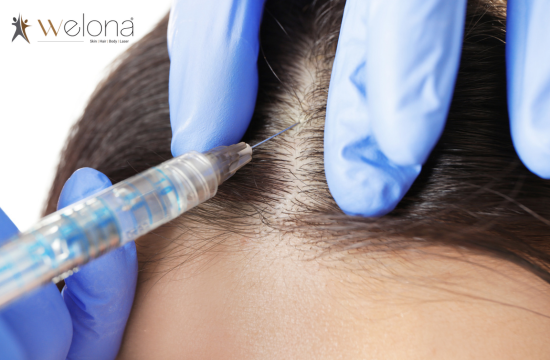
The preparation is then administered into selected areas of the scalp affected by hair thinning.
The procedure generally involves:
- Drawing a small amount of blood.
- Processing it to release and concentrate growth factors.
- Separating the required growth-factor-rich preparation.
- Administering the concentrate into targeted areas of the scalp.
You can learn more about GFC Hair Regrowth Treatment at Welona and how the procedure is performed.
The Science Behind GFC and Hair Follicles
Hair follicles are living structures that repeatedly move through growth, transition, and resting phases. Their activity is influenced by hormones, blood supply, signalling molecules, and other biological factors.
Platelets contain several growth factors and signalling proteins, including:
- Platelet-derived growth factor (PDGF)
- Vascular endothelial growth factor (VEGF)
- Epidermal growth factor (EGF)
- Insulin-like growth factor (IGF)
- Other proteins involved in tissue repair and cellular signalling
When concentrated growth factors are delivered into the scalp, they are intended to support biological processes around existing hair follicles.
GFC does not immediately create new hair. Instead, the treatment aims to improve the environment in which suitable follicles function. Over time, this may support healthier hair growth and improvements in hair density or quality.
A Study conducted by ncbi that reported improvements in hair quality and density in patients with androgenetic alopecia. However, the study involved only five patients, so its findings should be considered promising rather than definitive.
Potential Benefits and Current Research
GFC is being studied as a treatment option for androgenetic alopecia, commonly known as pattern hair loss.
Research has reported encouraging improvements in measures such as hair density, hair growth ratio, and hair quality. A 2024 study evaluating concentrated growth factors in patients with androgenetic alopecia reported significant improvements in hair density and hair growth ratio three months after the first treatment, with improvements maintained during the six-month observation period.
However, GFC research is still relatively limited compared with some established hair-loss treatments. Larger, well-designed studies are needed to better understand its effectiveness, ideal treatment protocols, and long-term outcomes.
For suitable patients, potential improvements may include:
- Reduced hair fall
- Improved hair density
- Better-looking hair quality
- Increased hair shaft thickness
- Gradual improvement in thinning areas
Results vary between individuals, and GFC should not be viewed as a guaranteed cure for hair loss.
Suitable Candidates and the Importance of Diagnosis
GFC may be considered for people experiencing early-stage hair thinning, pattern hair loss, reduced hair density, or progressive thinning associated with androgenetic alopecia.
The most important consideration is the underlying cause of hair loss.
Hair thinning can result from genetics, nutritional deficiencies, hormonal changes, stress, illness, medications, scalp conditions, and other factors. These causes may require different treatment approaches.
GFC is intended to support existing follicles. If a follicle has been permanently lost or extensively scarred, injectable growth-factor treatments cannot simply recreate a completely new follicle.
A professional hair and scalp assessment can help determine whether GFC is appropriate or whether another treatment should be considered.
GFC and PRP: Understanding the Difference
GFC and PRP are related treatments, but they are not exactly the same.
Both are prepared from the patient’s own blood and make use of platelet-derived biological components.
PRP, or Platelet-Rich Plasma, typically involves preparing plasma containing a concentrated number of platelets. GFC techniques are designed to obtain a preparation rich in released growth factors.
The exact preparation protocols can vary, and the available evidence does not establish that GFC is universally better than PRP for every patient.
The more useful approach is to assess the type and stage of hair loss, follicular health, and treatment goals before deciding which option may be suitable.
Treatment Sessions and Expected Timeline
Hair growth takes time because follicles follow a natural growth cycle. You should not expect to leave a GFC session with visibly thicker hair immediately.
When improvements occur, they generally develop gradually over several weeks or months. The timeline depends on the underlying cause of hair loss, degree of thinning, follicular health, and individual response.
The number and frequency of sessions may depend on:
- Type and severity of hair loss
- Existing hair density
- Follicular health
- Age and individual biological factors
- Relevant hormonal or nutritional conditions
- Response to previous treatment
Welona’s current GFC protocol recommends three initial sessions spaced approximately four to six weeks apart, followed by maintenance treatment when appropriate.
Your actual treatment plan should be determined after a hair and scalp assessment rather than following a fixed schedule without considering your individual needs.
Why a Hair and Scalp Assessment Matters ?
Two people may experience similar-looking hair thinning for completely different reasons.
Before recommending GFC, it is important to understand the pattern and severity of hair loss, whether follicles remain active, the condition of the scalp, and any relevant medical or hormonal factors.
A dermatologist may also consider whether GFC should be used alone or alongside other treatments.
This helps make the treatment plan more targeted instead of recommending the same procedure whenever someone reports hair fall.
GFC Hair Regrowth Treatment at Welona Chennai
At Welona, the approach to hair regrowth begins with understanding your hair-loss pattern and scalp condition before recommending a treatment plan.
For suitable candidates, GFC Hair Regrowth Treatment uses growth factors derived from the patient’s own blood and delivers them into targeted areas experiencing hair thinning.
Depending on the cause and severity of your hair loss, GFC may be recommended as part of a personalised hair-regrowth strategy.
You can also explore Welona’s hair and skin treatments to understand the different treatment options available.
Final Thoughts
GFC uses concentrated growth factors derived from your own blood to support biological processes around existing hair follicles. For appropriately selected patients, it may help improve hair density, hair quality, and follicular activity over time.
However, GFC is not a one-treatment-fits-all solution. Its suitability depends on the cause of hair loss, the condition of the follicles, and your individual treatment goals.
The first step toward an effective hair-regrowth plan is understanding why your hair is thinning.
Concerned about hair thinning or increasing hair fall? Book an appointment with Welona for a personalised hair and scalp assessment and to find out whether GFC is suitable for you.
Frequently Asked Questions
1. Does GFC really regrow hair?
GFC may support hair regrowth in suitable patients by delivering concentrated growth factors to areas with active but thinning hair follicles. Small clinical studies have reported improvements in hair density and hair quality, particularly in androgenetic alopecia. Results vary, and GFC cannot guarantee regrowth in every case.
2. How long does GFC take to show hair growth?
Hair growth is gradual. Some clinical studies have reported measurable improvements within a few months of treatment. The exact timeline depends on the cause of hair loss, follicular health, treatment schedule, and individual response.
3. Is GFC better than PRP for hair loss?
Both treatments use components derived from the patient’s blood, but their preparation differs. Current evidence is not sufficient to establish that GFC is universally better than PRP for every patient. Treatment should be selected according to the individual’s hair-loss condition and clinical assessment.
4. How many GFC sessions are needed for hair regrowth?
The number of sessions varies according to the type and severity of hair loss. Welona’s current protocol recommends three initial GFC sessions spaced approximately four to six weeks apart, with maintenance treatment considered afterwards based on individual requirements.